Every growing food and consumer goods plant reaches the same point at the end of the line. Orders climb. Case formats multiply. The packing station that kept up last year now sets the pace for the whole run. The question is not whether to pack faster. The question is how to pack faster without burning out your team or your budget.
This is where the choice between manual case packing and a robotic case packer becomes a real operations decision. Both methods put product into shipping cases. They do it in very different ways, at very different speeds, and with very different effects on your people. This guide compares the two honestly, shows a worked example with real numbers, and helps you judge when case packing automation actually pays off.
A robotic case packer is a machine that picks finished product and places it into a shipping case, carton, or tray without a person doing the lifting. It is a form of secondary packaging automation. The product is already sealed in its primary package, a pouch, bag, jar, or container, and the case packer groups those units and loads them into the case in a set pattern.
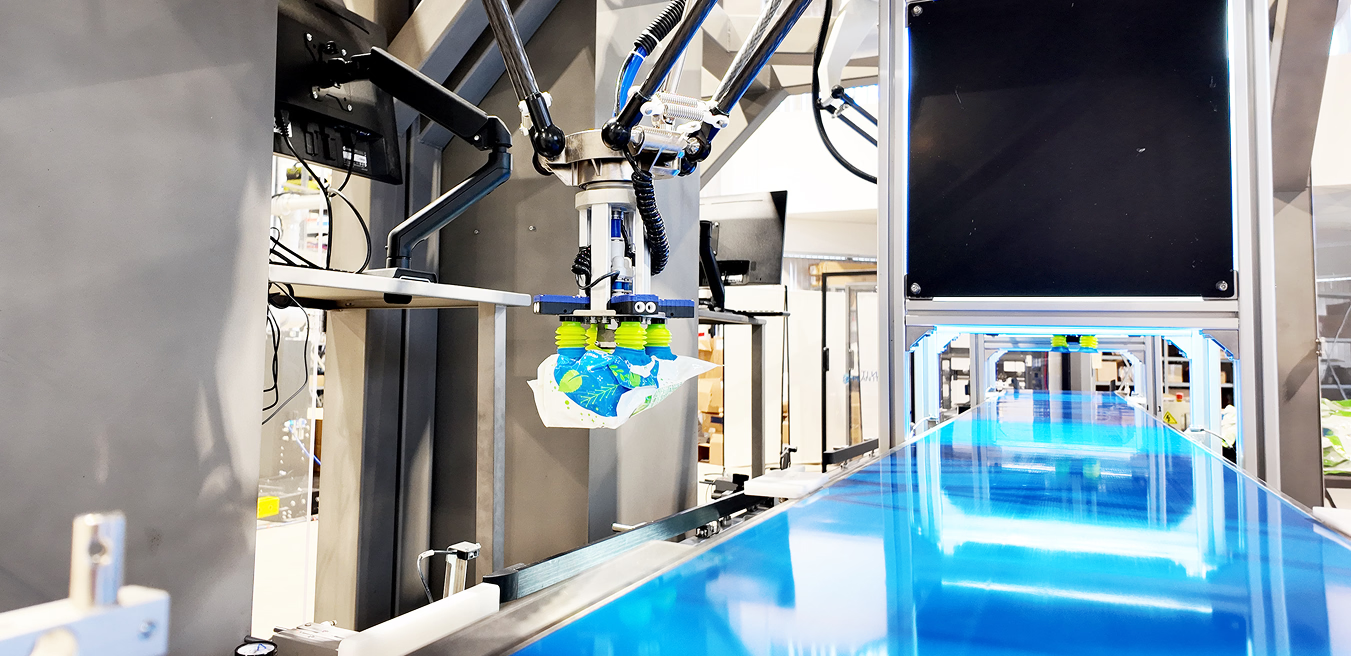
Most systems follow the same basic steps:
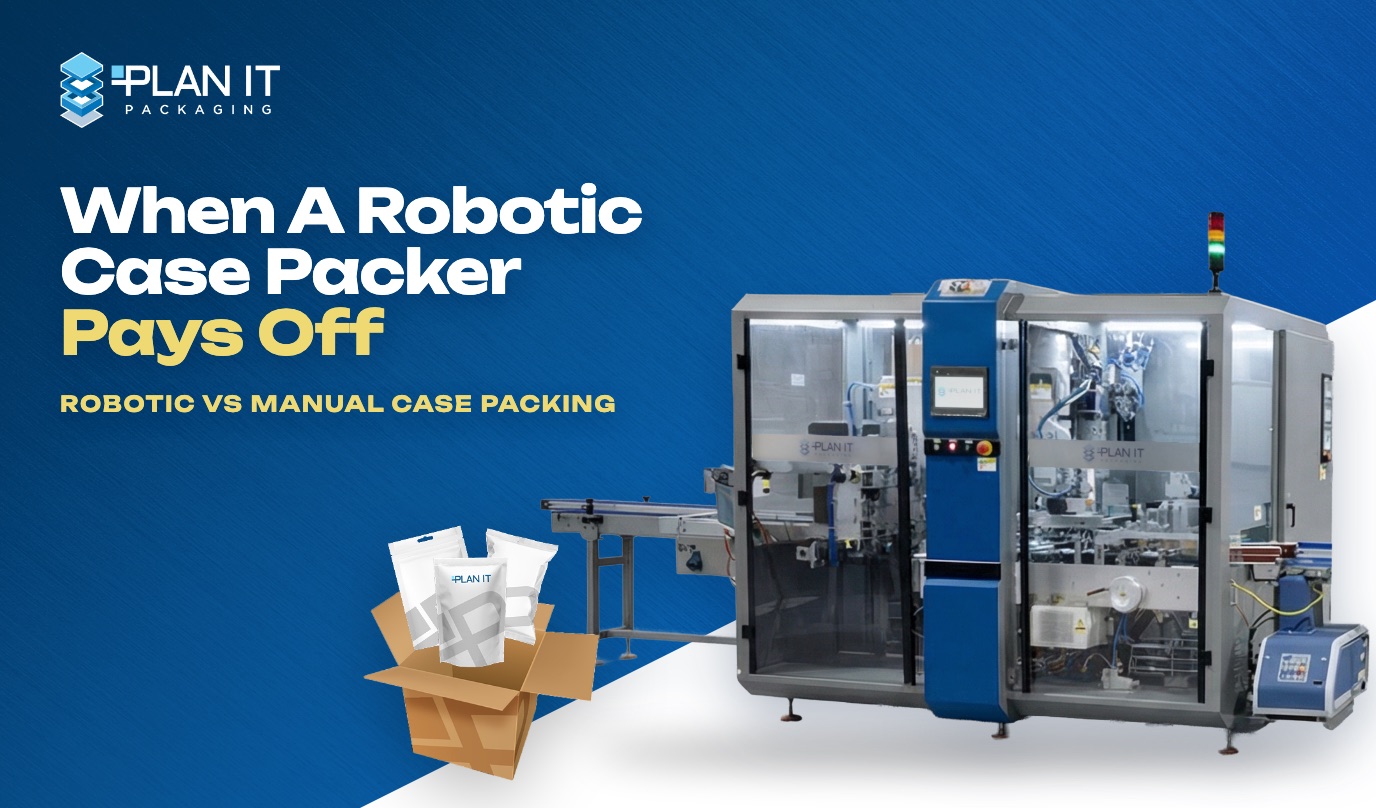
The RoboPacker from PLAN IT Packaging, for example, combines product picking, case erecting, and packing in one cell, using a 4-axis delta robot, an integrated vision system, and an Allen Bradley touchscreen control. That combination lets a single case packer machine handle a wide range of products with precise placement, which is the core job of any robotic packaging system.
The better question is not simply "does a robot pack faster." It is "does the product, the case format, and the volume justify a robotic case packing system over a trained person." That is what the rest of this comparison answers.
Manual case packing is flexible and cheap to start. A person can pack almost any product into almost any case with little setup. That flexibility is real, and for some operations it is the right call.
The trade-off shows up at volume. A person tires, slows, and varies. A robotic case packer holds the same speed and the same pack pattern for the whole shift. Here are the main differences.
Neither column is "better" in the abstract. The right answer depends on your run. The goal is balance.
This is not just a throughput issue. It is a safety issue.
Manual case packing means lifting the same product thousands of times per shift, often with a reach and a twist to reach the case. The National Institute for Occupational Safety and Health lifting equation treats a 51-pound load as the starting limit under ideal conditions, then lowers the recommended weight as lifting frequency, reach, height, and body twist increase. The Occupational Safety and Health Administration recognizes repetitive lifting, forceful exertion, and awkward posture as leading causes of musculoskeletal disorders (MSDs) in food plants.
A robotic case packer takes that repetitive lifting off the floor. The robot does the picking and placing. Your team moves to roles that use judgment: monitoring the line, running changeovers, checking quality, and handling exceptions.
Automation supports your people here. It does not replace them. It removes the part of the job most likely to cause an injury and keeps your experienced operators on the tasks that need a human.
Speed is the number buyers ask about first, and it is where a robotic case packing system earns its place.
A system like the RoboPacker reaches up to 15 cases per minute and up to 40 picks per minute, handling products up to 10 pounds with a high-speed 4-axis delta robot. Real throughput depends on your product, your case format, and your pack pattern. A small pouch into a large case packs differently than a rigid container into a tray. That is why speed is quoted as a range and confirmed against your product, not promised as a single hero figure.
What matters for planning is that the speed holds. A robotic case packer runs at the same rate in hour eight as it did in hour one. Manual packing does not. Over a full shift, steady speed is often worth more than peak speed.
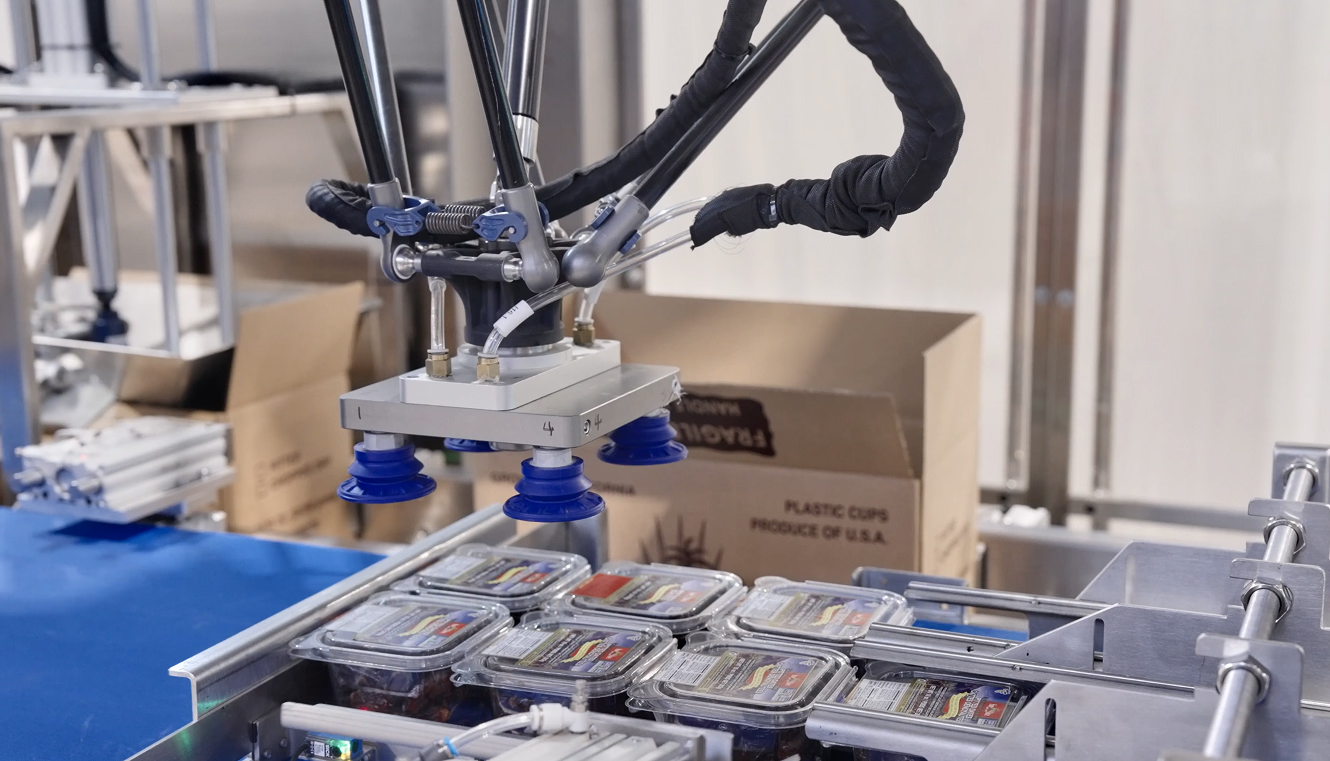
Modern robotic case packers handle a wide range of products and pack styles. Common configurations include:
Flexibility comes from two things: the gripper and the controls. A custom gripper is matched to the product shape so the robot can handle multiple products cleanly. The vision system finds each product's position on the conveyor, so the robot places it correctly without a person lining it up, and the Allen Bradley touchscreen keeps setup and control simple. For top load cases, pouches, and trays, a single automated case packer can cover most of a plant's product packaging needs. The aim is to automate the repetitive packing step while keeping your team on higher-value work.
Choosing a case packing solution is less about the robot and more about your line. Evaluate these points before you compare machines:
A compact, modular case packing machine that fits your space and integrates with your existing conveyors will serve you better than a faster machine you cannot fit or staff. Match the system to the operation, not the other way around.
A robotic case packer rarely works alone. End-of-line packaging runs in a clear order, and the case packer sits in the middle:
When these stages are designed together, the line runs as one system instead of four machines fighting for timing. Full line integration, matched grippers, and shared controls are what turn a fast case packer into a complete packaging line. This is also where a people-first plan matters: the same team that once lifted every case now runs a coordinated, lower-strain operation.
Consider a mid-size US snack plant running one primary line, five days a week, across two shifts. The product is a 6-ounce stand-up pouch packed into a corrugated case. Volume has grown, and the plant currently staffs a manual packing station with several operators per shift to keep up.
Here is how the comparison plays out, using example assumptions the plant would confirm against its own data:
The output math is straightforward: one robotic case packing cell covers the plant's 12-case-per-minute target with margin, and holds it all shift. The labor that was tied to lifting moves to monitoring, changeovers, and quality. The safety exposure from repetitive lifting drops because the robot does the picking.
Payback is where honesty matters. The real return depends on your own case volume, your loaded labor rate, and how many shifts you run. A single-shift, low-volume line may not justify the investment yet. A two- or three-shift line at steady volume usually does, and the gap widens as volume grows. The way to know is to model it against your numbers, not a generic rule. The investment calculators are built for exactly that.
It depends on your volume and labor. A robotic case packer is usually worth it on high-volume lines that run multiple shifts with steady case formats, where one cell replaces several manual packing stations and holds its speed all day. On low-volume or highly variable runs, a manual station can still be the better fit. Model the payback against your own case volume and loaded labor rate before deciding.
Systems like the RoboPacker reach up to 15 cases per minute and up to 40 picks per minute, handling products up to 10 pounds. Actual speed depends on the product, the case format, and the pack pattern, so throughput is confirmed against your specific product rather than promised as a single number. The key advantage is that a robotic case packing system holds its rate across a full shift.
Yes. A robotic case packer handles the case packing step, and a cobot palletizer handles stacking finished cases onto the pallet. In a well-designed end-of-line setup, the case former, case packer, case sealer, and palletizer are integrated so the whole line runs on shared timing and controls rather than as separate machines.
Traditional, or hard automation, case packers use fixed mechanisms built for one case style and pattern, which makes them fast but rigid. A robotic case packer uses a vision-guided robot and custom grippers, so it can handle multiple products and change formats without rebuilding the station. Robotics generally wins when a line runs varied products or expects its formats to change over time.
Choosing between manual case packing and a robotic case packer comes down to your volume, your products, and your people. At PLAN IT Packaging, we believe automation should support your team and protect your production, not pressure either one. Because when the repetitive lifting leaves the floor and the line holds its speed all shift, your operators can focus less on keeping up and more on keeping production moving.
See the full lineup of robotic case packers, run the numbers with our investment calculators, or tell us about your line and we will help you find the right fit. Let's PLAN IT Together!