


August 3, 2023
In the constantly evolving world of food processing and packaging, the auger filler stands out as a cornerstone of efficiency and accuracy.
This guide offers a comprehensive look at auger fillers, their types, workings, and how to choose the right one for your operations.
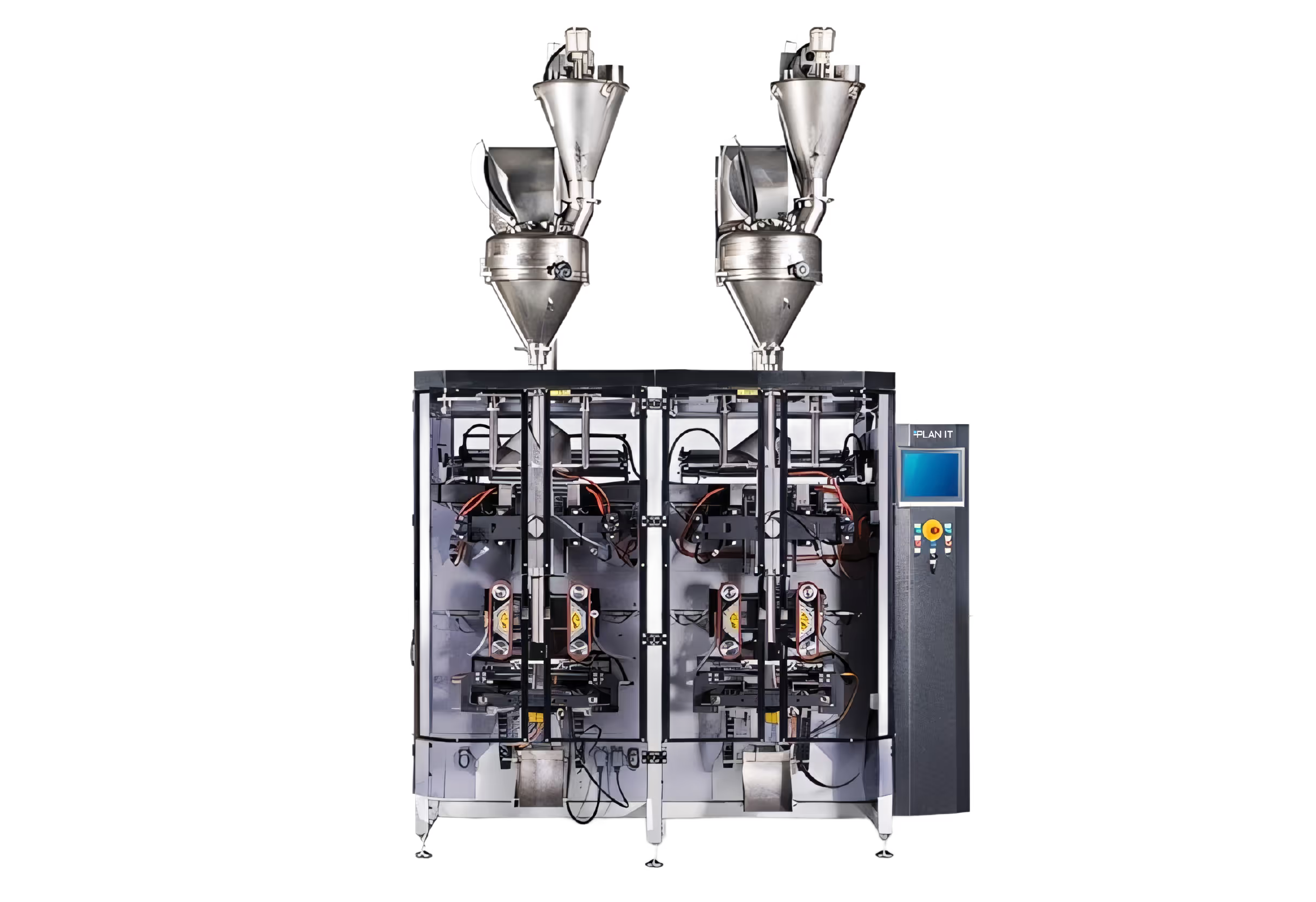
An auger filler is a type of filling machine that uses an auger (a spiral screw-like device) to dispense and fill products into containers.
It is most commonly used for powders and granular products. The auger’s rotation controls the amount of product dispensed, providing precision in filling.
The operation of an auger filler is grounded in the controlled rotation of its spiral screw, the auger.
The product to be filled is loaded into a hopper above the auger. As the auger rotates, it picks up the product and transports it downward, dispensing it into a container or pouch below.
The amount of product dispensed is controlled by the speed and duration of the auger’s rotation. This gives auger fillers a high degree of precision, making them ideal for applications where accurate filling is crucial, such as in the pharmaceutical industry or for premium food products.
There are several types of auger fillers, each designed for different applications:
Standard auger fillers are the most common type and are used for filling dry, free-flowing powders and granules into containers.
They are often used in industries such as food, pharmaceutical, and chemical.
Inline auger fillers are designed to be integrated into a production line, offering high-speed filling of powders and granules.
They are particularly suitable for high-volume production environments.
Rotary auger fillers are designed for high-volume production environments, featuring multiple filling heads that rotate to fill several containers simultaneously.
This design significantly increases the filling speed compared to single-head auger fillers.
Net weight auger fillers are designed for precision filling.
They incorporate a weighing system that ensures each container is filled to a precise weight. This type is often used in the pharmaceutical industry and for premium food products where precise measurements are critical.
Dual auger fillers feature two augers that can operate simultaneously, providing a high filling speed without sacrificing accuracy.
They are ideal for high-volume operations that require precise filling.
Choosing the right auger filler for your operations requires careful consideration of several factors:
The type of product you’re filling is a crucial factor in choosing an auger filler.
Different types of products (powders, granules, flakes, etc.) can have varying flow properties that affect the performance of the auger filler. It’s important to choose an auger filler that’s designed to handle your specific product type.
The volume of product you need to fill is also an important consideration.
If you have a high volume of product to fill, a high-speed rotary auger filler may be the best choice. If you have a lower volume or need more precise filling, a standard or net weight auger filler may be more appropriate.
The level of accuracy required for your filling process is another key factor.
If your filling process requires high precision (for example, in the pharmaceutical industry), a net weight auger filler may be the most appropriate choice.
Your budget will inevitably play a role in your choice of auger filler. More advanced machines with higher capabilities, like rotary or dual auger fillers, tend to be more expensive.
However, the investment can pay off in terms of increased productivity and efficiency in the long run.
Auger fillers are a critical component in many packaging operations, offering precision and efficiency.
By understanding the different types of auger fillers and the factors to consider when choosing one, you can make an informed decision that will best serve your operational needs.
For more information about our range of auger fillers and other packaging machinery, please don’t hesitate to get in touch.

%203.avif)


.svg)
.svg)
