

November 24, 2026
Sweets are a seasonal business. The four major seasons, Valentine's Day, Easter, Halloween and the winter holidays, account for 64 percent of annual chocolate and candy sales in the United States, according to the National Confectioners Association (NCA). The winter holidays alone generated $7.9 billion in 2025.
For confectionery manufacturers, that calendar puts real pressure on the packaging room. Runs get shorter. Formats multiply. A plant that runs plain bars in March may be filling mixed gift bags by September.
So choosing a packaging machine for bars or gummies is not just an equipment decision. It is a decision about how your line handles the product, the package and the season. This guide matches each product type to the packaging equipment that fits it, with real speeds.
Start with two questions. How is the product sold: by the piece, by weight or by count? And what does the finished package look like? Those two packaging requirements decide most of the line.
One format is outside this guide. Twist wrapping single pieces needs a dedicated twist wrapping machine, and PLAN IT Packaging does not sell that equipment. If your pieces arrive already wrapped, the weighing and bagging paths below still apply.
Rated speeds are maximums. Actual packing speed depends on the shape and size of products, the dimensions of the packaged products, the fill weight and how product is fed. A production line also runs at the pace of its slowest step.
Horizontal flow wrapping forms a tube of film around each bar, closes a fin along the bottom, then closes and cuts each end. The result is the familiar pillow pack. For bars, this is the workhorse candy wrapping machine, and it is usually what buyers mean by a candy wrapper machine.
Bars suit flow wrapping because they are uniform. The main choices are practical:
Chocolate is heat sensitive, so coated bars are often run on cold seal film, which bonds under pressure rather than heat. Settle the film with your film supplier and confirm it in a trial on your real product.
Caramels, marshmallows, fudge and chewy bars behave differently. They can deform, stick or drag when a lug chain pushes them along.
Inverted flow wrapping feeds film from below, so the product rides on the film instead. The iPack Series is built for these soft and hard-to-handle products, with recipe memory, a 2-meter infeed, and rotary or box-motion jaws with jam detection.
The goal is gentle, steady handling.
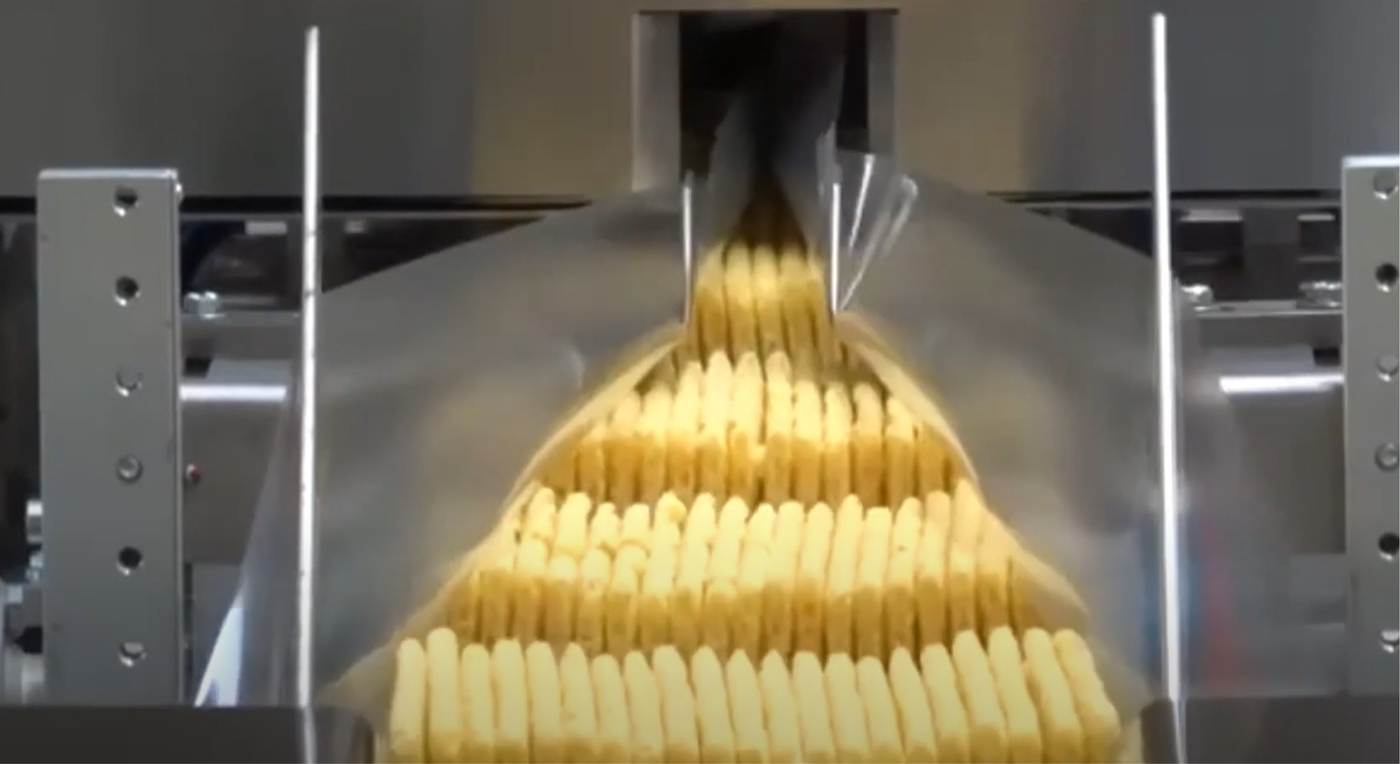
This product splits into two jobs, and the right gummy packaging machine depends on the label.
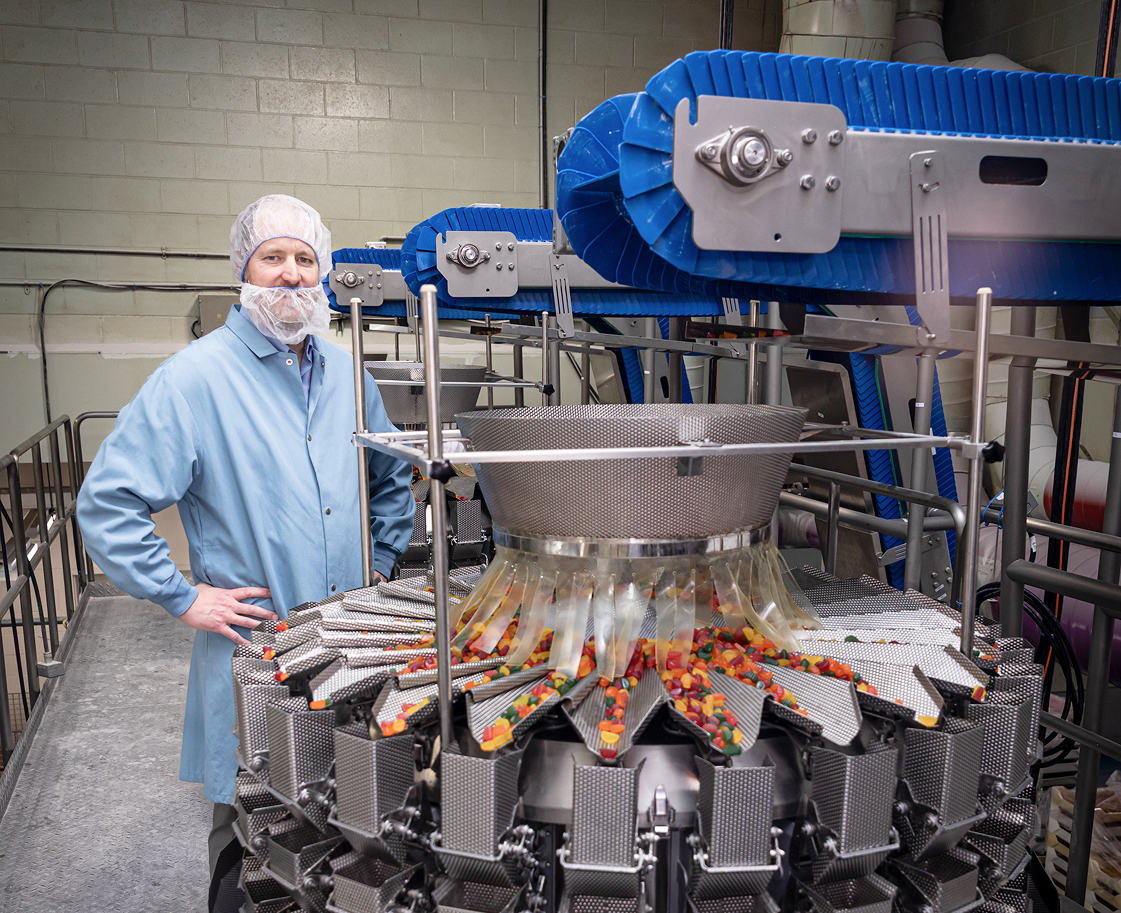
Sold by weight. A 5 oz bag needs a weigher, which acts as the filling machine for the bagger below it. A multihead weigher drops product into many small buckets, then combines the buckets closest to the target weight. The EliteWeigh offers 0.1 to 0.5 g accuracy, bucket sizes from 0.5 L to 9 L, and dimpled or smooth contact surfaces. Removable buckets, pans and chutes help with cleaning sticky product.
Sold by count. A bottle labeled "60 gummies" needs a counter. The EliteCount handles products 3 to 10 mm thick and 3 to 30 mm long, uses SICK infrared sensors, and runs on a 10-inch touchscreen human machine interface (HMI) with a Siemens programmable logic controller (PLC). A Teflon coating option reduces buildup. It can integrate with bagging and jar lines, including an edible line with the EcoBagger Mini.
The better question is not "What machine packs this product?" The better question is "Does my label promise a weight or a count?"
These pieces are dense and free-flowing, which suits a multihead weigher. They are also hygroscopic. Sugar draws moisture from humid air, and moisture can make the pieces soft and sticky. Two habits help: close the bag soon after the fill, and compare different materials for a real moisture barrier.
For pillow bags, a weigher on top of a VFFS bagger is the standard pairing. The bagger forms the bag from roll stock, fills it and closes it in one motion. The MarsRapid runs continuous motion at up to 180 PPM, and the intermittent MarsIM runs up to 80 PPM.
The same pairing works for stuffed hard candy and pre-wrapped pieces packed into small bags or share packs. If the pack must stand on the shelf, a RotoBagger takes the place of the VFFS bagger.
Every changeover matters.
A seasonal SKU often means new film, a new size and a new fill weight in the same week, across different packaging formats. Recipe memory, tool-less removable forming tubes, servo changeover on the EcoBagger Series and a broad range of widths on the RotoBagger all shorten that work.
Redundancy matters too. The question is not simply "How fast is the fastest machine?" The better question is "What happens to the season if that one machine stops?" When Ganong Bros. expanded its packaging capacity, PLAN IT Packaging supplied four independent bagging lines, each with a MarsRapid VFFS bagger and an EliteWeigh 24H multihead weigher. The company reached about 2.5 times the output of its previous production process, and if one line needs service, the others keep running. Read the Ganong case study.
Here is the math for a brand planning a holiday run of stand-up packs. The numbers are illustrative.
Three options compared:
The EliteWeigh at up to 200 WPM has headroom in every case, so the bagger sets production capacity. The single RotoBagger fits on paper, but one long stop could cost the season. The Duplex, or two single lines, leaves time for changeovers, sanitation and a second seasonal SKU.
Before you automate, work through these questions with your team.
A hand-loaded setup is cheap to start and flexible. An automatic packaging machine costs more up front, but it holds the same speed and fill accuracy for the whole shift, which is how a candy packing machine earns its place in a seasonal plant.
For leadership, the useful comparison is the cost of one missed seasonal window against the cost of the line. Overtime, temporary staffing and short-shipped orders add up quickly. Price depends on the machine path, speed and integration, so model it with your own volume in the investment calculators and review financing options.
Packaging automation also changes the work, not just the output. It helps your candy packers spend less time on repetitive hand work and more time running and improving the line, which is how a well-planned line can make the packaging process more efficient without asking more of your people.
The main types are horizontal flow wrapping for bars, inverted flow wrapping for soft or sticky products, multihead weighers paired with VFFS or premade bag machines for product sold by weight, and counters for product sold by count. Twist wrapping is a separate category for individually wrapped pieces.
Cost depends on the machine path, the speed and how much integration the line needs. A single bagger and a fully integrated line with feeding, weighing, inspection and case packing are very different investments. Judge price against your own volume and labor hours.
Flow wrapped bars typically use printed roll film matched to the product, and the same film is used to package many single pieces. Bagged products use roll film on a VFFS bagger or premade stand-up and zipper packs. Hygroscopic products need film with a good moisture barrier.
A typical line moves product on a conveyor, weighs or counts it, wraps or bags it, inspects it with a checkweigher or metal detector, then loads cases and builds pallets. Each step is matched to the product, the package and the target speed.
At PLAN IT Packaging, we believe the right packaging solution starts with the product, not the catalog. Because when the machinery matches how your product is sold and how your season runs, your team can spend less time reacting and more time keeping production moving.
Explore our packaging solutions for sweets and snacks, compare flow wrapping systems, or read our earlier article on snacks and sweets.
Let's PLAN IT Together! Give us a call at 1-866-339-3407 or tell us more about your packaging needs here.