Customer Service & Support
We are committed to keeping your line in production.


We are committed to keeping your line in production.
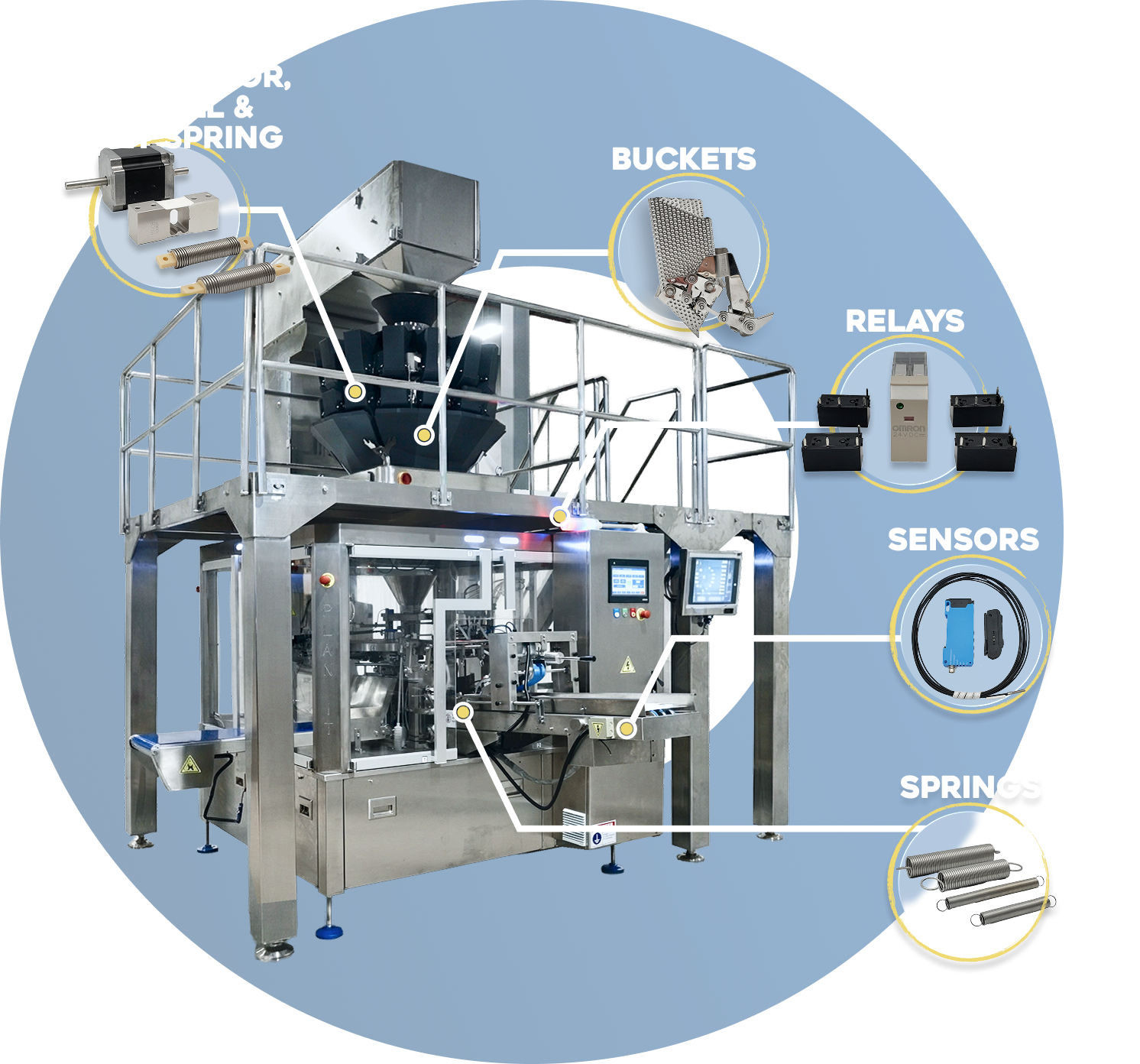
Our Spare Parts Service is designed to help you stay prepared, protect uptime, and eliminate the guesswork around what to stock and when. We work alongside your team to build a parts strategy tailored to your equipment, production demands, and risk tolerance.
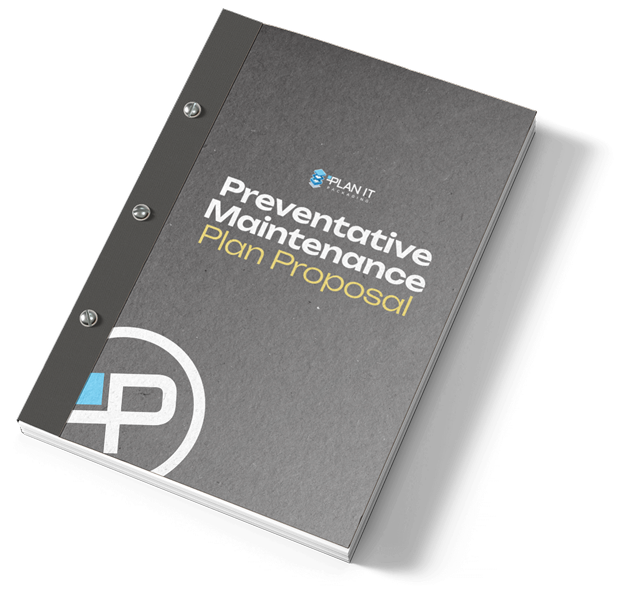
We believe your PM program should be built around your business, your products, and your team — not a predefined checklist. Every plan is tailored to your operational priorities, with each tier defined by the time and depth of support you need, not by limits on what we can deliver.
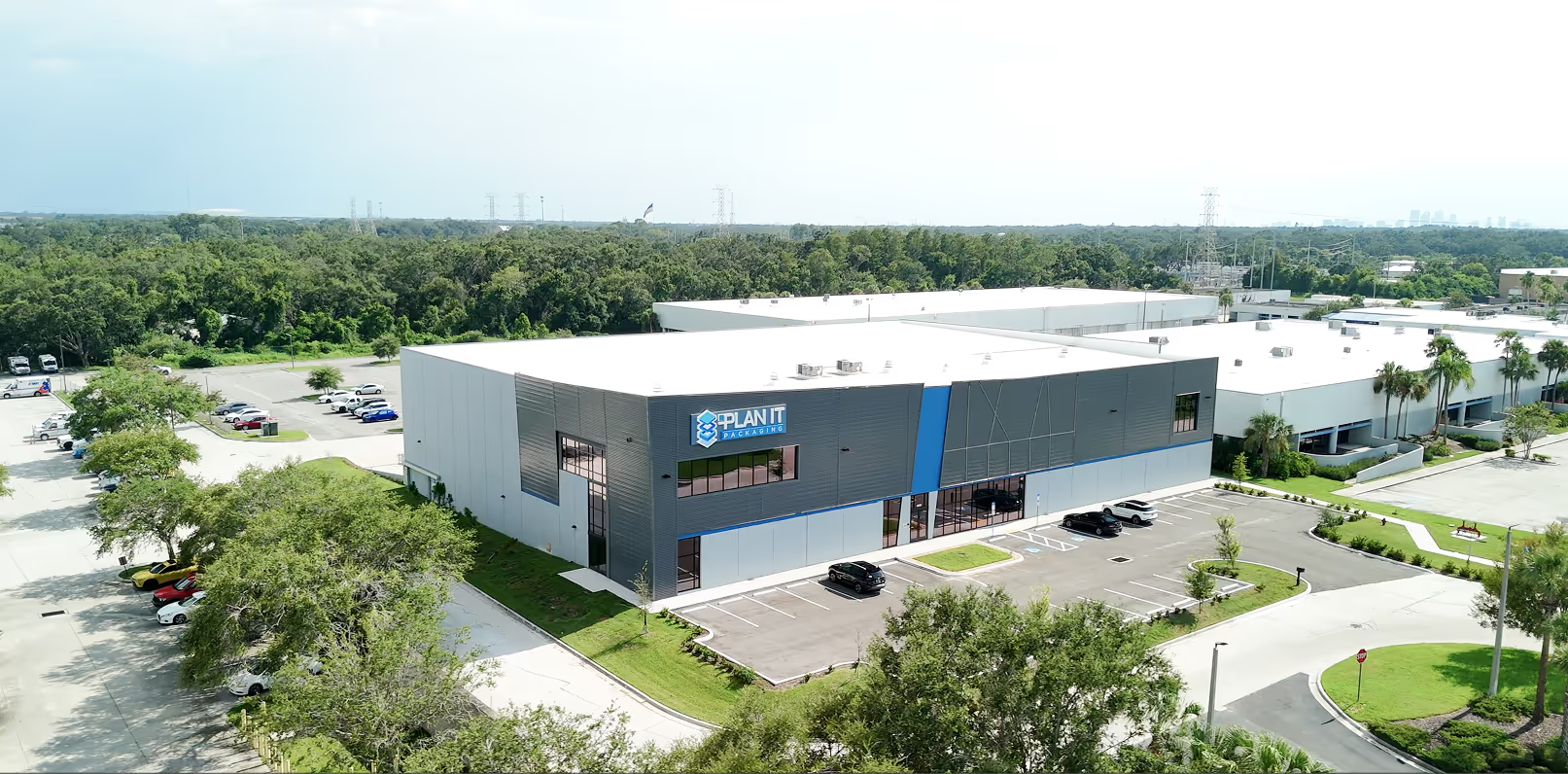
4525 Oak Fair Blvd
Tampa, FL 33610, USA
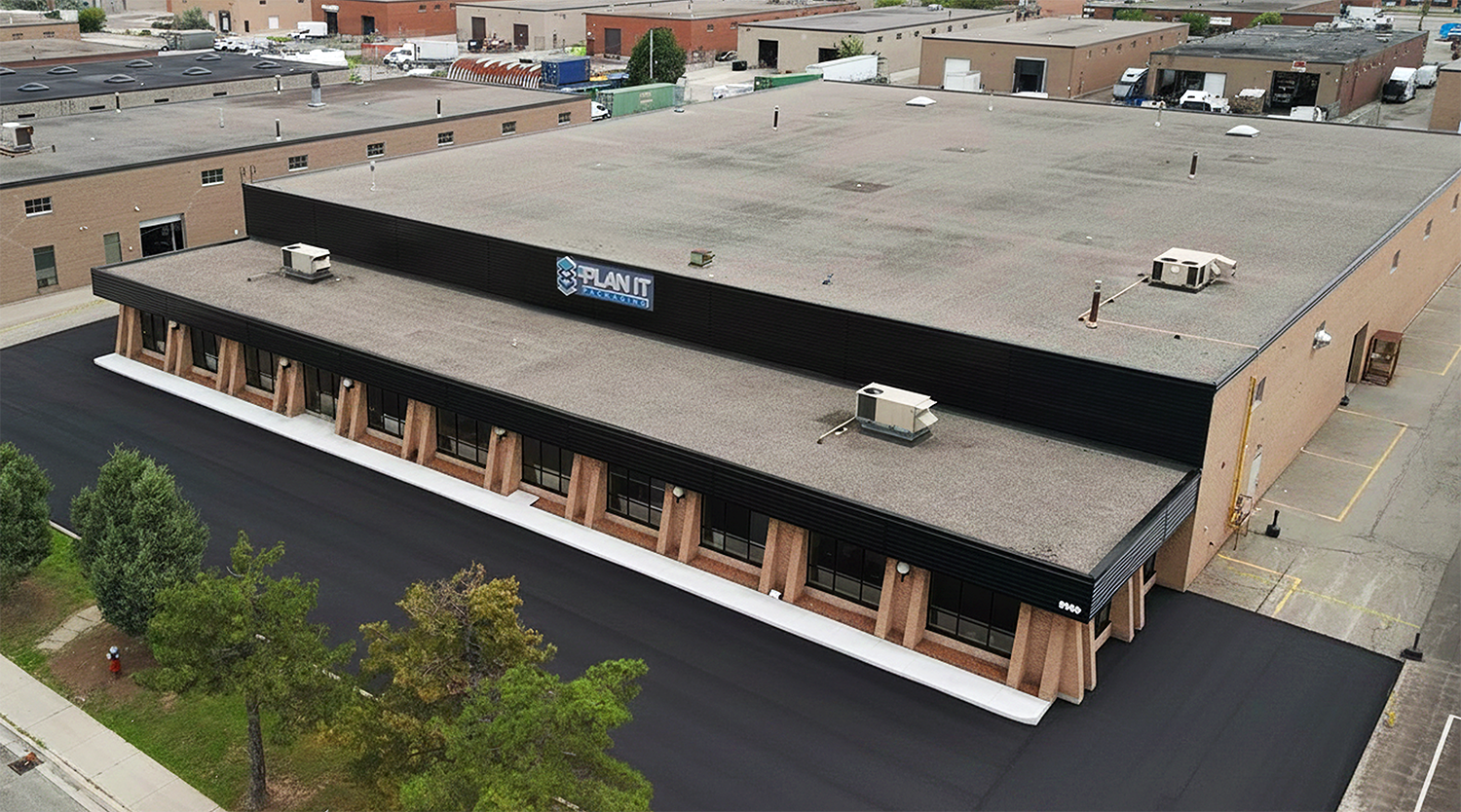
PLAN IT Packaging Systems
5145 Timberlea Blvd, Mississauga, ON L4W 2S3, Canada
September 17, 2026
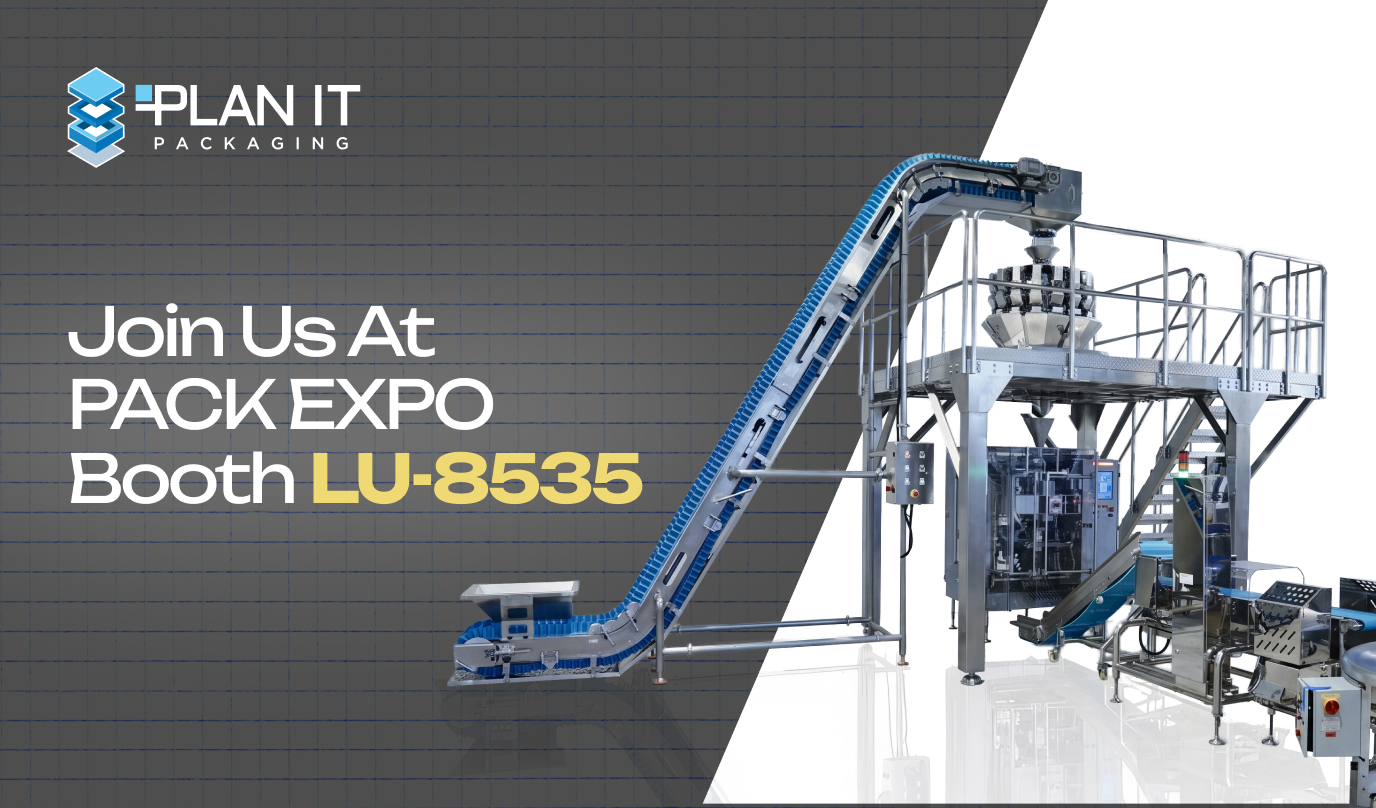
Preparing for PACK EXPO Chicago 2026? Discover what to bring, what to expect, and how to make the most of your visit to PLAN IT Packaging at Booth LU-8535.
PACK EXPO Chicago 2026 is almost here, and PLAN IT Packaging is getting ready to showcase THE PLAN IT LINEUP.
From high-speed vertical form fill seal (VFFS) packaging machines and precision weighing systems to case packing and robotic automation, our lineup is designed to help manufacturers find practical packaging solutions built around their products, production goals, and unique requirements.
If you’re planning to visit PACK EXPO Chicago this year, a little preparation can help you get more value from your time at the show. Here’s what to know before visiting PLAN IT Packaging at Booth LU-8535 in the Lake Side Upper area.
PACK EXPO Chicago brings together packaging and processing professionals from across a wide range of industries. It’s an opportunity to explore packaging machinery, automation technologies, and integrated production solutions while connecting directly with equipment manufacturers and industry experts.
At the PLAN IT Packaging booth, you’ll be able to explore automation solutions spanning multiple stages of the packaging process, including:
More importantly, our team will be there to discuss how these technologies can work within your specific production environment.
If you’re looking at new packaging machinery or considering automation for your production line, bringing the right information and materials can make your conversations at the show much more productive.
Product samples are one of the most valuable things you can bring.
Every product behaves differently during the packaging process. Factors such as size, shape, weight, texture, flowability, and product characteristics can all influence the equipment and packaging configuration required.
If possible, bring representative samples of the products you’re looking to automate. These samples can help our team better understand your application and discuss potential packaging and automation solutions.
If you already have an established packaging format, bring examples of your current packaging as well.
This can help us understand your existing bag, pouch, tray, case, or other package format and identify opportunities for improvement, automation, or line integration.
The more we understand about your production requirements, the more specific we can make our recommendations.
Consider bringing information such as:
You don’t need to have every detail finalized. Even a general overview of your operation can give our team a useful starting point.
Think about what you would like to improve.
Are you looking to increase production speed? Reduce manual packaging? Improve consistency? Address labor challenges? Add flexibility for multiple SKUs? Integrate packaging equipment into an existing production line?
Come prepared to talk about the challenges you’re experiencing. Our goal is to understand the application first and then explore solutions that make sense for your operation.
PACK EXPO is a great opportunity to speak directly with packaging automation experts, so bring your questions.
Whether you’re just beginning to explore automation or already have a specific project in development, our team can help you work through equipment requirements, production goals, line integration, and potential next steps.
At PACK EXPO Chicago 2026, PLAN IT Packaging will be showcasing a lineup of packaging and automation solutions designed for a variety of production environments.
Our focus goes beyond individual machines. We help manufacturers evaluate how equipment can work together as part of a complete packaging operation, from weighing and bagging through case packing and robotic palletizing.
And while the machines are a big part of the show, the people behind them matter just as much.
Our team will be available at the booth to learn about your products, answer your questions, and discuss what’s next for your production line.
If you’re attending PACK EXPO Chicago 2026, make PLAN IT Packaging part of your show itinerary.
📍 Booth: LU-8535
📌 Location: Lake Side Upper
📅 Event: PACK EXPO Chicago 2026
Want to learn more about the show, our booth, and what we’re bringing to Chicago?
Visit our PACK EXPO Chicago 2026 tradeshow page for event details, featured equipment, and additional information to help you plan your visit.
Ready to talk packaging automation?
Bring your product samples, your questions, and your production goals. We’ll bring the expertise and solutions to help you PLAN IT.
PLAN IT Packaging Systems
1-866-339-3407
sales@planitpackaging.com
www.planitpackaging.com
September 4, 2026
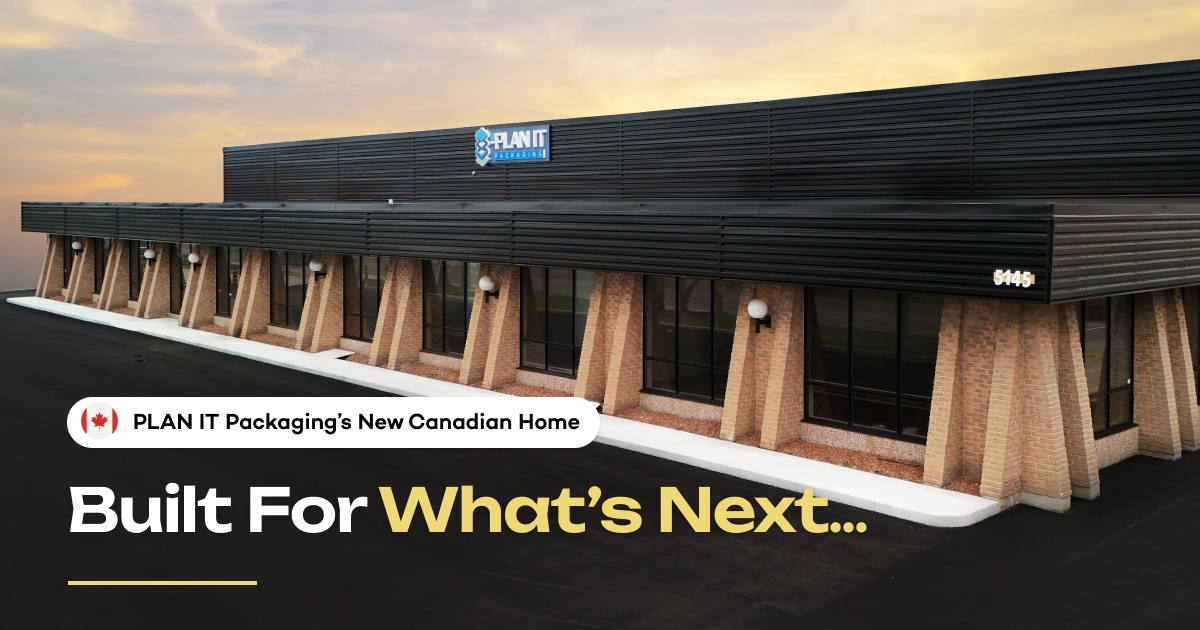
PLAN IT Packaging's new 40,000-square-foot facility in Ontario offers expanded space for packaging equipment assembly, system integration, testing, training, and customer support.
PLAN IT Packaging is excited to announce the move into our new 40,000-square-foot facility at 5145 Timberlea Boulevard in Mississauga, Ontario, marking another major investment in the continued growth of our North American packaging automation business.
The expanded Mississauga operation gives PLAN IT significantly more room to showcase, assemble, integrate, test, and support packaging equipment, while creating a stronger experience for customers, partners, and our growing team.
At the center of the facility will be approximately 2,065 square feet of dedicated showroom space, giving customers the opportunity to see packaging machinery and integrated systems in operation. The warehouse provides more than 31,800 square feet of production and staging space, a 20-foot clear height, and six truck-level loading doors plus a drive-in door, providing greater flexibility for machine assembly, system integration, testing, shipping, and larger turnkey automation projects.
The facility will also include approximately 1,764 square feet dedicated to an in-house machine shop and fabrication area. This added capability will allow our team to support custom integration, equipment modifications, tooling, guarding, conveyors, and project-specific requirements directly from our Mississauga operation.
The property has undergone extensive improvements, including renovated office space, exterior upgrades, new parking lot paving, warehouse electrical drops, a new roof, and upgraded building infrastructure. With more than 40 parking spaces, a fully enclosed warehouse, sprinkler and drainage systems, and partial warehouse air conditioning, the facility has been designed to support both our people and the increasingly sophisticated automation systems we deliver.
The Mississauga expansion also complements PLAN IT Packaging's 35,000-square-foot Customer Experience Center in Tampa, Florida, strengthening our ability to support customers throughout both Canada and the United States.
Together, the two facilities provide PLAN IT with a significantly expanded North American footprint for equipment demonstrations, customer testing, machine inventory, integration, factory acceptance testing, training, service, and technical support. Tampa continues to provide an important hub for customers across the United States, while Mississauga expands our Canadian engineering, assembly, integration, and customer-support capabilities.
This two-facility approach gives customers greater access to equipment and technical resources closer to their operations while providing PLAN IT additional capacity to stage and complete increasingly complex packaging lines, robotic systems, and end-of-line automation projects.
More than simply additional square footage, the new Mississauga facility represents PLAN IT Packaging's continued investment in people, infrastructure, machine availability, system integration, customer support, and long-term North American growth.
As our equipment portfolio, team, and customer base continue to expand, these investments give us the space and capabilities to continue delivering complete packaging automation solutions built around the needs of the manufacturers we serve today, and where production is headed next.
Interested in seeing packaging automation solutions in action? We invite manufacturers, production teams, and industry partners to connect with PLAN IT Packaging and explore how automation can support their operations. Book a consultation or plan a visit to our Toronto-area showroom to speak with our packaging automation experts, see equipment firsthand, and discuss your current and future packaging needs.
Book a Free Consultation or Visit Our Toronto Showroom
August 24, 2026
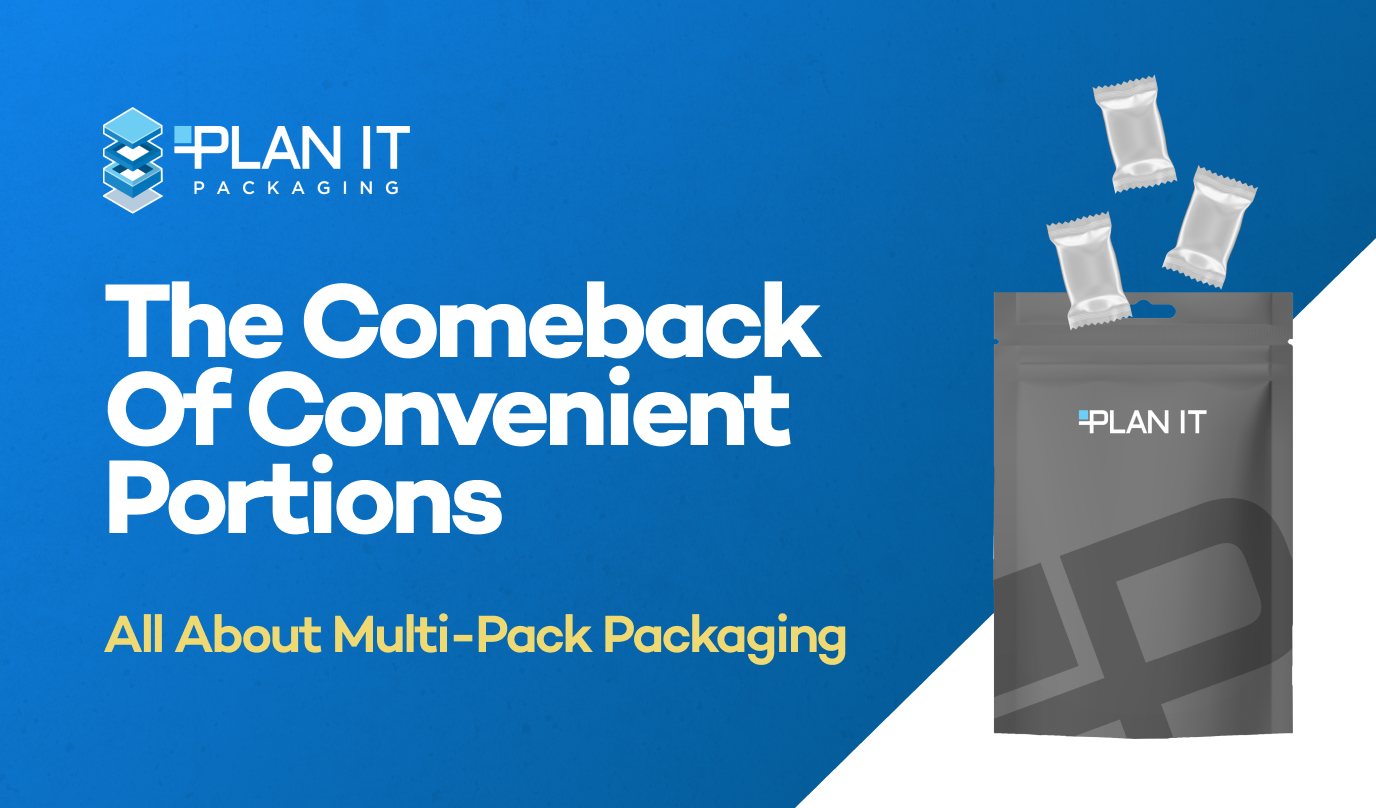
Discover why portion control packaging is growing, from snack packs and multipacks to stick packs, pouches, and single-serve formats.
Packaging trends often feel new, but some of the strongest ideas are really smart updates to concepts consumers have valued for decades. Portion control is one of them.
Long before today’s wellness brands, protein snacks, gummies, mints, stick packs, and on-the-go snack pouches, there was already a major consumer shift happening around portioned eating. In the early 1990s, programs like WeightWatchers and products like Lean Cuisine helped make portion awareness part of everyday food culture. Consumers wanted convenience, structure, and a clear way to enjoy the foods they liked without overthinking every serving.
Today, that same idea is back, but it looks different.
Instead of only frozen meals or diet-focused packaging, portion control now shows up in snack packs, fruit snacks, gummy bears, protein bites, candy, mints, drink mixes, vitamin powders, wrapped bars, and individual servings stored inside larger master packs. The message is no longer just about dieting. It is about convenience, freshness, portability, sharing, and giving people more control over when and how they enjoy a product.
People are eating and snacking in more places than ever. The kitchen table is no longer the only place where food choices happen. Products are being consumed during commutes, at the office, between meetings, on public transportation, at sporting events, in school lunches, in gym bags, on road trips, and during travel.
That means packaging has to work harder.
A large bag of snacks may be fine at home, but it is not always practical on the move. A single wrapped portion, small pouch, stick pack, sachet, or mini bag gives the consumer a cleaner and easier experience. They can take what they need, keep the rest protected, and enjoy the product without carrying the entire package.
That convenience is a major reason multipacks and master packs continue to grow across so many categories.
Consumers want the flexibility to eat what they want, when they want it, without sacrificing freshness, quality, or portion control.
There is a reason individually portioned products are so common in successful snack and confectionery categories. Think about kids’ fruit snacks, gummy bear packs, KIND snack packs, mint packs, candy multipacks, protein bites, or individually wrapped items inside a larger retail pouch or carton.
The smaller package creates the moment of use. The larger package creates the value.
Together, they give consumers the best of both worlds. The master pack offers quantity, shelf presence, and safe storage. The individual packs inside make the product easy to carry, share, ration, and enjoy over time.
For parents, that might mean packing school lunches without measuring servings. For office workers, it might mean keeping a better snack option in a desk drawer. For commuters, it might mean having something easy to grab before heading out the door. For athletes or active consumers, it might mean having the right portion ready before, during, or after an event.
The format supports real life.
One of the most important shifts is that portion control no longer has to feel restrictive. In the past, portioned eating was often tied closely to dieting. Today, the meaning is broader and more positive.
Consumers still care about serving size, calories, ingredients, and moderation, but they also care about convenience and lifestyle. A portioned pack does not have to say, “eat less.” It can say, “enjoy this more easily.”
That is a powerful difference.
A small pack of gummies, mints, trail mix, drink powder, or wrapped snacks can help consumers enjoy the products they already like in a more manageable way. It reduces mess, protects the remaining product, and makes it easier to avoid opening a large bag when only a single serving is needed.
For brands, this creates an opportunity to meet modern consumer expectations without changing the core product. The same snack, candy, powder, or supplement can become more portable, more giftable, more shareable, and more retail-friendly simply by changing the packaging format.
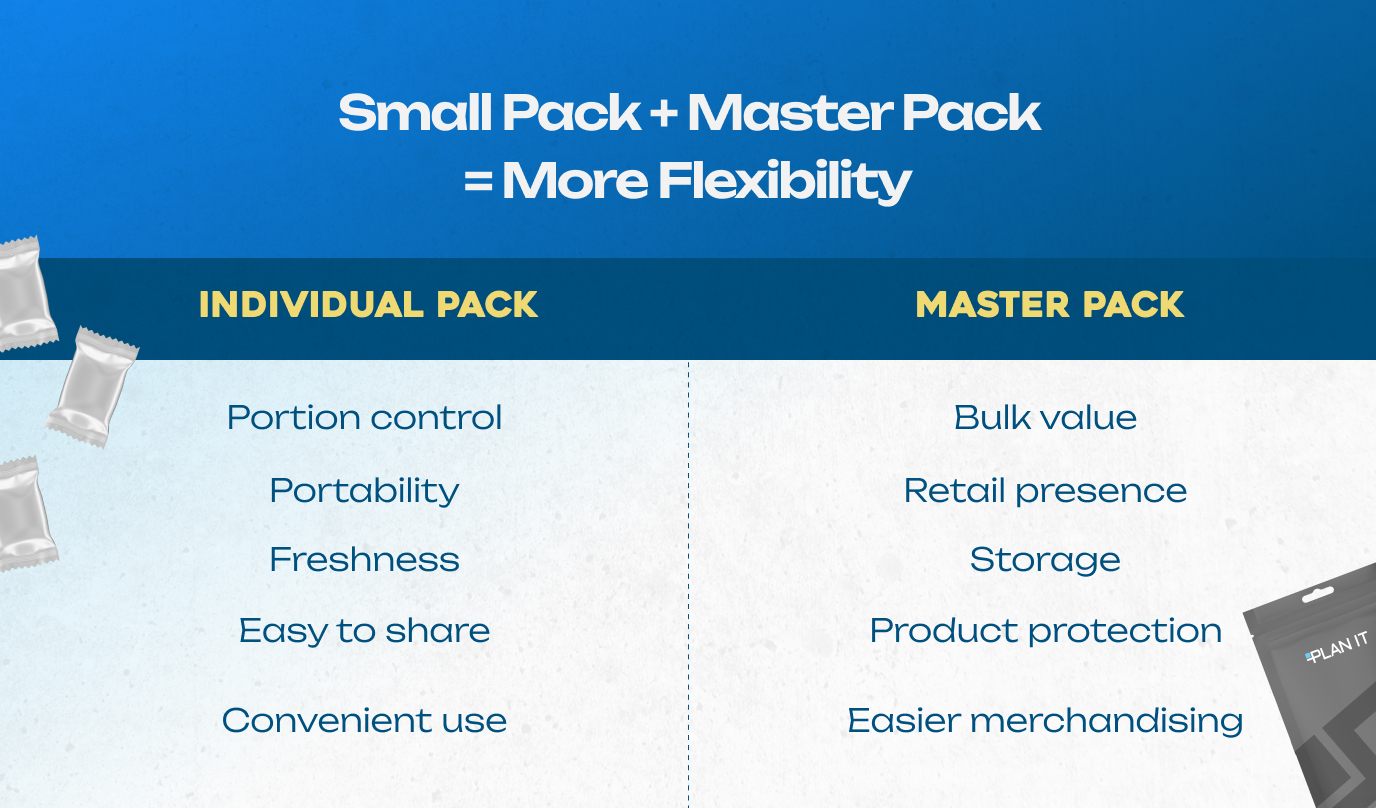
The larger package is just as important as the smaller one.
A well-designed master pack does more than hold individual portions. It protects product quality, supports retail presentation, improves storage, and helps communicate brand value. Whether the final format is a premade pouch, carton, bag, stand-up pouch, variety pack, or club-store multipack, the outer package plays a critical role in the customer experience.
It keeps the individual units organized. It helps protect against damage. It allows for strong branding and clear messaging. It also gives retailers and e-commerce channels a practical format that can be merchandised, shipped, stored, and sold efficiently.
This is especially important as more companies look at larger-count packs for warehouse clubs, direct-to-consumer programs, subscription boxes, and family-size formats. Customers want the savings and convenience of buying in bulk, but they still want the daily-use experience of a clean, controlled portion.
That is exactly where multipack and master-pack formats shine.
The rise of portioned and multipack formats is really about one thing: movement.
People are moving between home, work, school, gyms, events, airports, hotels, and daily routines. They need products that move with them. Packaging has to support that without making the product feel less premium or less protected.
A strong multipack strategy can help brands serve more use cases from a single product line. One product can become a lunchbox item, an office snack, a travel essential, a fitness companion, a sample pack, a club-store value pack, or a variety pack.
That flexibility can be a major advantage.
It also helps brands build repeat use. When the package is easy to store, easy to carry, and easy to open, the product becomes easier to work into a customer’s routine.
At PLAN IT Packaging, we help companies build packaging systems that support the way consumers live today. From small portion packs to larger master-pack formats, our equipment is built to help brands deliver convenience, consistency, and quality at scale.
Our flow wrappers are ideal for individually wrapped bars, candies, baked goods, mints, snack portions, and other single-serve items. Our vertical baggers support snack packs, gummies, powders, granules, and portioned products in flexible bags. Our premade pouch systems help create premium outer packs, resealable formats, and retail-ready packages. Our stick pack and sachet systems support powders, drink mixes, supplements, sweeteners, condiments, and other single-serve products.
Whether the goal is a small individual package, a larger family-size pouch, a variety pack, or a complete multipack solution, PLAN IT Packaging can help configure the right line around the product, production goals, and customer experience.
Portion control has come a long way since the early days of diet-focused packaging. Today, it is about freedom, flexibility, and making products easier to enjoy in real life.
Eat what you want, when you want it.
PLAN IT Packaging helps make sure it is packed, protected, and ready to go.
Ready to Build a Smarter Packaging Line?
From single-serve portions and stick packs to multipacks, pouches, and complete end-of-line systems, PLAN IT Packaging helps manufacturers across Canada and North America find the right packaging equipment for their products and production goals.
Whether you're exploring a new packaging format, increasing production capacity, or automating your existing line, our team can help you plan the right solution.
Let’s Plan It Together.
Phone: 1-(866)-339-3407
Book Free Consultation: Inquire Today!
July 21, 2026
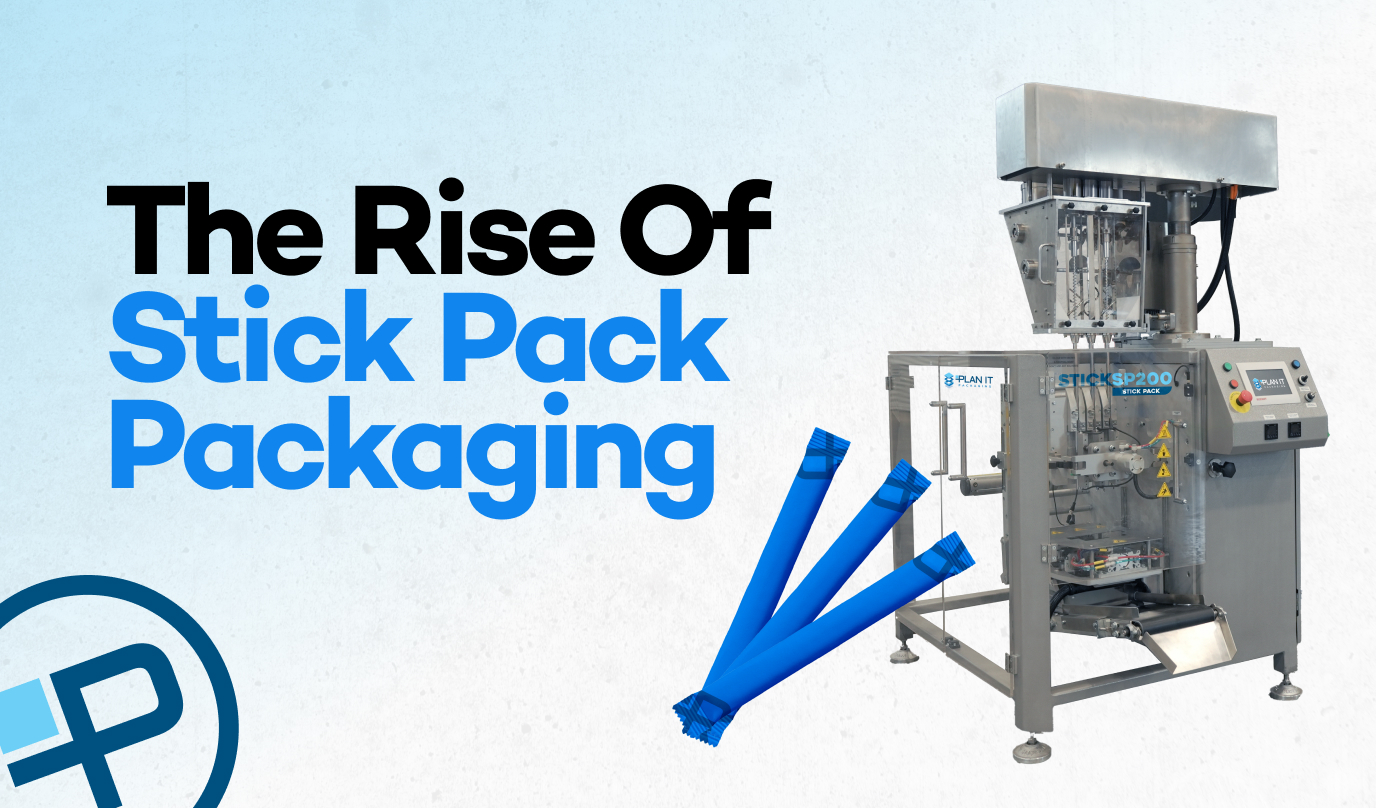
Discover why stick pack packaging is transforming supplements, hydration powders, vitamins, and drink mixes. Explore automated stick pack packaging solutions from PLAN IT Packaging.
The way people consume vitamins, hydration powders, drink mixes, supplements, and functional ingredients has changed. Consumers are no longer building their routines around a kitchen counter, a tub of powder, and a plastic scoop. They are moving faster, traveling more, working out on the go, and looking for products that fit into their day instead of interrupting it.
That shift is one of the biggest reasons stick packaging continues to gain momentum.
From early drink mix formats like Crystal Light On The Go to modern wellness brands like Liquid I.V., AG1, hydration powders, greens blends, collagen, protein, electrolytes, and vitamin mixes, the stick pack has become more than just a package. It has become part of the product experience.
It is portable. It is clean. It is easy to dose. It helps protect the product. Most importantly, it gives customers the flexibility to use the product when and where they need it.
From Scoops and Bottles to Single-Serve Convenience
For years, many powder-based products relied on canisters, tubs, scoops, jars, or liquid filling formats. Those formats still have a place, especially for at-home use, but they do not always match the way today’s customer lives.
A scoop can be messy. A large tub is not easy to pack in a gym bag. Liquid products can be heavier to ship, more complex to package, and less convenient for travel. With stick packs, brands can offer the same core product benefit in a format that feels lighter, cleaner, and easier to use.
The appeal is simple: tear, pour, mix, and go.
That matters in categories built around routine and lifestyle. Whether someone is adding electrolytes to a water bottle after a workout, taking a greens supplement while traveling, using a vitamin powder at the office, or keeping drink mixes in a backpack, the stick pack supports a more flexible “do it when you need it” approach.
It also helps remove friction. Consumers do not need to measure. They do not need to carry the whole container. They do not need to worry about whether they packed the scoop, spilled powder, or exposed the product to moisture every time they opened the main package.
.jpg)
Health and wellness products are often built around consistency. The customer has to remember to take the product, enjoy the product, and feel like it fits naturally into their routine. Packaging plays a major role in that.
Stick packs make that routine easier.
They allow brands to deliver a controlled portion every time. That is especially important for vitamins, supplements, electrolytes, functional drink powders, collagen, protein, fiber, probiotics, and other active ingredients where serving size matters.
They also help support sampling, variety packs, subscription models, travel packs, and club-store formats. A customer can try multiple flavors, keep packets in different places, or bring a week’s worth of servings on a trip without carrying a full container.
For the brand, this format creates more flexibility. Stick packs can support premium positioning, on-the-go convenience, seasonal flavors, trial-size programs, retail-ready multipacks, and larger bulk formats. They also provide more space for thoughtful secondary packaging, whether that is a carton, a pouch, a display box, or a master pack.
One of the most interesting packaging trends is the rise of stick packs inside a larger master package. This is especially relevant for club stores, online subscription programs, and larger retail formats.
Instead of selling only a tub of powder, brands can offer a high-count format with individually sealed stick packs inside a larger premade pouch, carton, or club-store pack. This gives consumers the value of bulk purchasing while keeping the quality and portion control of individual servings.
That combination is powerful.
The customer gets the convenience of buying more at once, but the product is still protected one serving at a time. Each packet stays sealed until use, which can help preserve freshness, reduce mess, and make the product easier to share, store, and travel with.
For powders that are sensitive to moisture, clumping, aroma transfer, or repeated exposure, the individually sealed stick pack can also help protect the experience from the first serving to the last.
This is where the package becomes part of the brand promise. The customer is not just buying a powder. They are buying consistency, convenience, and confidence that the product will be ready when they are.

Stick packs also open up new commercial opportunities.
A brand can sell a 10-count trial pack, a 30-day routine pack, a 60-count club pack, a variety pack, a travel pack, or a subscription refill. The same product can be packaged for e-commerce, retail shelves, gyms, hotels, sample programs, and warehouse clubs.
That flexibility matters for growing brands. It allows companies to meet the customer in more places without completely changing the product formulation.
It also gives established companies a way to modernize legacy products. A drink mix, supplement powder, hydration blend, or functional ingredient that was once sold only in a tub can be reintroduced in a more portable, lifestyle-focused format.
In many ways, stick packaging helps brands move from “use this at home” to “take this with you.”
At PLAN IT Packaging, we understand that not every company enters the stick pack market at the same stage. Some brands are launching a new product and need an efficient entry-level system. Others are scaling quickly and need higher lane counts, faster output, and more automation around filling, sealing, counting, and secondary packaging.
That is why PLAN IT Packaging offers stick pack solutions built for a wide range of production needs, from entry-level 2- to 4-lane machines all the way up to large-scale 24-lane high-production systems.
Whether the application is hydration powder, vitamins, drink mixes, supplements, collagen, protein, sugar, sweeteners, nutraceuticals, or other powdered products, our team can help align the right machine configuration with the product, package size, speed requirement, and long-term growth plan.
Stick packaging is not just about making a smaller package. It is about creating a format that matches how people live today. It supports travel, portion control, freshness, convenience, and the growing demand for products that fit into active routines.
No matter where your customers go, PLAN IT Packaging helps make sure your product is packaged and ready when they need it.
Whether you're launching a new hydration mix, scaling a supplement brand, or modernizing an established product line, PLAN IT Packaging can help you find the right stick pack solution for your production goals. From entry-level systems to high-speed multi-lane packaging lines, our team designs equipment that grows with your business.
Contact PLAN IT Packaging today to discuss your application and discover how stick pack packaging can help improve convenience, efficiency, and product presentation.
May 14, 2026
In food manufacturing, production challenges are often discussed in terms of labor, scheduling, supply chain delays, sanitation, communication, and yield loss. While these issues may not always begin with the machine itself, packaging equipment plays a major role in how well a facility responds when those challenges appear.
In food manufacturing, production challenges are often discussed in terms of labor, scheduling, supply chain delays, sanitation, communication, and yield loss. While these issues may not always begin with the machine itself, packaging equipment plays a major role in how well a facility responds when those challenges appear.
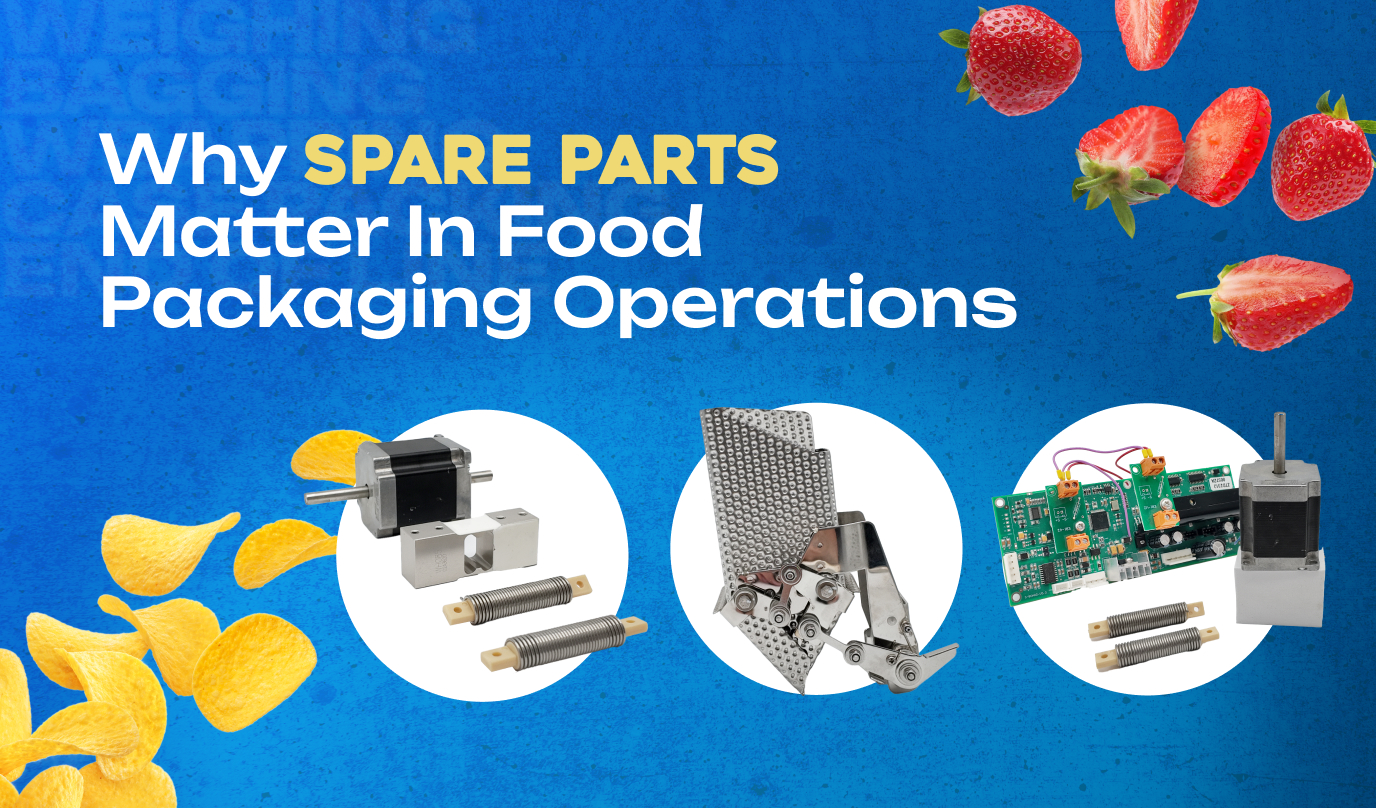
That is where spare parts become more than a maintenance item. They become a planning tool, a risk-reduction strategy, and a way to keep production moving when every hour of downtime matters.
For food processors and packaging teams, keeping the right spare parts on hand can help reduce emergency repairs, protect uptime, improve maintenance response, and create a stronger return on investment over time.
Unplanned downtime is rarely just one simple expense. It can impact labor, product waste, missed shipments, overtime, customer commitments, sanitation schedules, and the overall production plan.
When a packaging line stops because of one missing component, the cost is not only the part itself. The real cost includes the time spent diagnosing the issue, sourcing the replacement, waiting for shipment, rescheduling production, and restarting the line.
That is why the idea of “we’ll order it when it breaks” can quickly become an expensive strategy. Emergency parts, rushed shipping, delayed production, and lost efficiency often cost far more than maintaining a planned inventory of critical spare parts.
A smart spare parts program helps manufacturers shift from reaction to preparation.
Every operation has to manage costs carefully. No one wants to overstock shelves with parts that may not be needed for years. At the same time, carrying too little inventory can leave a production team exposed when a critical component fails.
The goal is balance.
A strong spare parts strategy helps identify which parts are critical, which parts are commonly replaced, and which components have longer lead times. This allows maintenance and operations teams to stock what matters most without overloading inventory.
Critical parts may include items such as belts, blades, sensors, sealing components, wear parts, contact parts, bearings, rollers, switches, electrical components, or machine-specific assemblies that are essential to keeping the line running.
The question is not simply, “How many parts should we keep?”
The better question is, “Which missing parts would stop production if we did not have them?”
Labor shortages and skill gaps continue to affect food manufacturers across North America. New operators, temporary labor, and smaller maintenance teams can make troubleshooting more difficult, especially when a worn component begins affecting machine performance.
Having the right parts available helps reduce uncertainty.
Instead of losing valuable time identifying, ordering, and waiting for replacement parts, technicians can respond quickly and get the line back into operation. Spare parts do not replace training, but they do make it easier for teams to solve problems with confidence.
For facilities managing turnover or limited technical support, organized spare parts inventory can make maintenance response faster, cleaner, and more consistent.
High SKU variety is common in food manufacturing. Facilities may switch between package sizes, films, cartons, labels, formats, recipes, or product types throughout the week.
Every changeover matters.
When parts are worn, missing, or not ready, changeovers take longer. Operators may spend extra time adjusting the machine, troubleshooting seal quality, replacing small components, or trying to work around an issue that should have been handled before production began.
Keeping changeover-related and wear parts on hand helps reduce these delays. Fresh sealing components, knives, belts, guides, forming parts, rollers, and sensors can help teams move from one run to the next with fewer interruptions.
The more prepared the line is before a changeover begins, the less time is lost once production is ready to restart.
Most downtime events do not feel large at first. One belt wears out. One sensor fails. One blade dulls. One seal component begins causing inconsistent packages.
But one missing part can create a chain reaction.
A small issue can lead to stopped production, delayed shipments, overtime labor, increased waste, missed sanitation windows, and pressure on every department involved in the production schedule.
This is why spare parts planning is not just a maintenance concern. It is an operational risk strategy.
The line may be ready. The team may be ready. The product and packaging materials may be ready. But if one critical part is missing, the entire system can slow down or stop.
Food manufacturing has unique requirements that naturally interrupt production. Sanitation cycles, inspections, QA checks, documentation, and compliance steps are part of the process.
Reliable equipment helps those required interruptions go smoother.
Worn belts, damaged seals, cracked guards, loose fittings, or aging contact parts can create additional delays during inspection or startup. Having replacement parts on site helps maintenance teams address these issues before they become food safety concerns or production interruptions.
Spare parts also support preventative maintenance planning. Instead of waiting for a component to fail, teams can replace high-wear parts during scheduled downtime, sanitation windows, or planned service intervals.
That means fewer surprises during live production.
Not every issue shuts down the line immediately. Some problems quietly reduce performance over time.
Worn parts can contribute to poor seals, inconsistent cuts, misalignment, overfill, underfill, packaging defects, product waste, or rework. The machine may still be running, but the operation is losing efficiency with every imperfect package.
Replacing worn components at the right time helps protect package quality and production consistency.
In food manufacturing, small inconsistencies can become expensive quickly. A strong spare parts plan helps protect yield, reduce waste, and support a more stable finished package.
A spare parts strategy does not need to be complicated. It simply needs to be intentional.
Maintenance teams should review each machine and identify:
1. Which parts are critical to uptime?
2. Which parts wear most often?
3. Which parts have long lead times?
4. Which parts are needed for changeovers?
5. Which parts support sanitation and food safety?
6. Which parts are shared across multiple machines?
7. Which parts should be reordered once used?
This helps create a practical spare parts checklist for each line. It also helps avoid two common mistakes: stocking too much of what is rarely needed and not stocking enough of what can stop production.
Digital or organized manual tracking can also help teams monitor inventory levels, reorder points, usage history, and part numbers. The faster a team can find the right part, the faster they can recover.
For many maintenance teams, the challenge is not understanding the value of spare parts. It is justifying the investment internally.
The business case is simple: stocked critical parts reduce risk.
Leadership teams should consider the cost of one hour of downtime, one missed shipment, one emergency repair, one rushed shipment, or one extended production delay. In many cases, the cost of a small spare parts inventory is far less than the cost of waiting until something breaks.
Spare parts are not about expecting failure. They are about protecting production.
Spare parts are not just about fixing something after it breaks. They are about preparation, control, and confidence.
For food manufacturers managing labor challenges, changeovers, supply disruptions, sanitation requirements, planning gaps, and yield pressure, having the right parts on hand can make a measurable difference.
A well-planned spare parts inventory helps reduce avoidable downtime, support maintenance teams, protect product quality, and keep packaging lines ready for what comes next.
At PLAN IT Packaging, we believe spare parts are part of a stronger production strategy. Because when your line is prepared, your team can focus less on reacting to problems and more on keeping production moving.
May 12, 2026
See how PLAN IT Packaging helped Ganong Bros. achieve 2.5x packaging output with high-speed VFFS automation and independent packaging lines designed for scalability and reliability.
For more than 150 years, Ganong Bros. has been part of Canada’s confectionery story. From iconic products like Chicken Bones and Pal-o-Mine to modern co-manufacturing partnerships across North America, the company has continued to evolve while staying rooted in quality, tradition, and innovation.
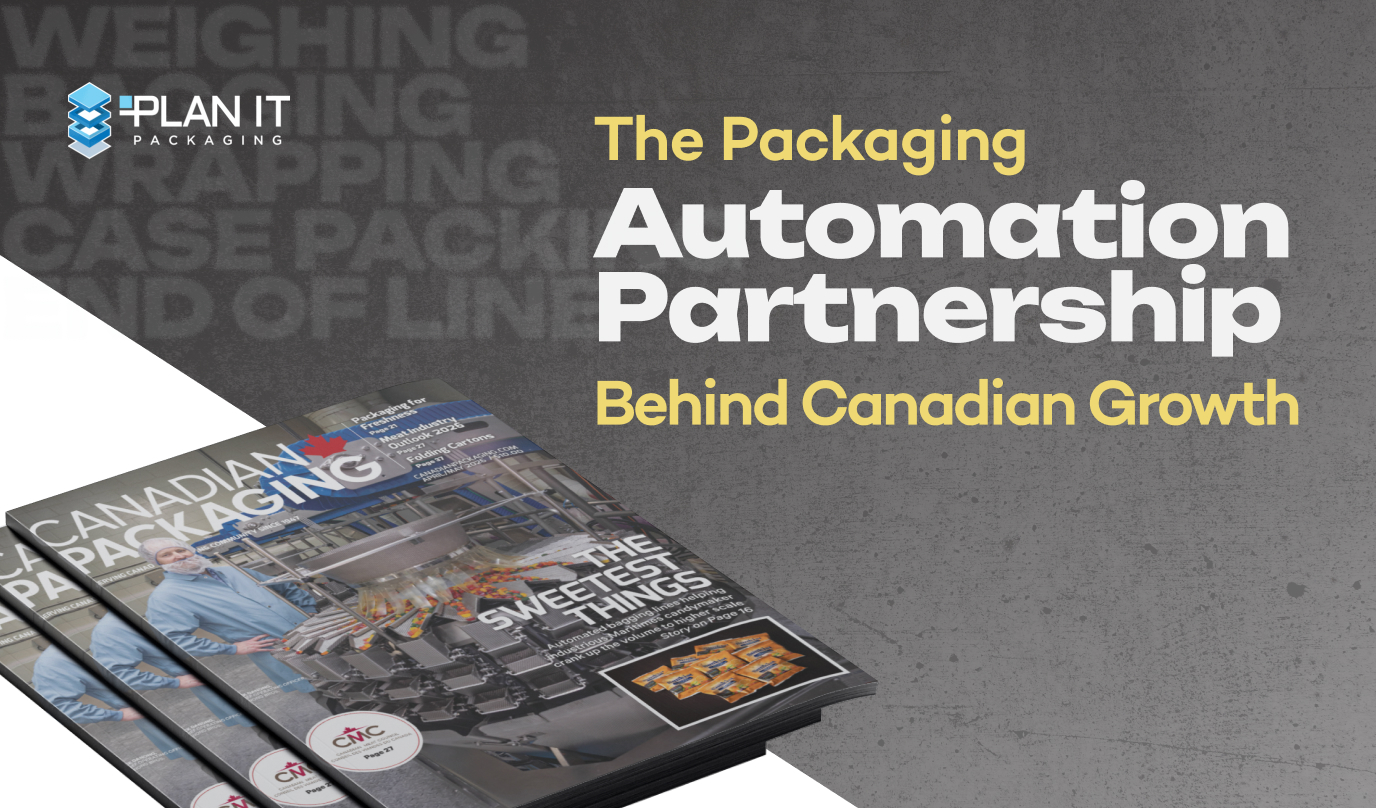
Today, we are proud to share that PLAN IT Packaging has been featured alongside Ganong Bros. in the April/May issue of Canadian Packaging magazine, highlighting a recent automation project designed to help support Ganong’s growing production demands.
.jpg)
As demand for Ganong’s confectionery and co-manufacturing services continued to grow, the company identified an opportunity to expand its packaging capacity while improving operational efficiency and redundancy.
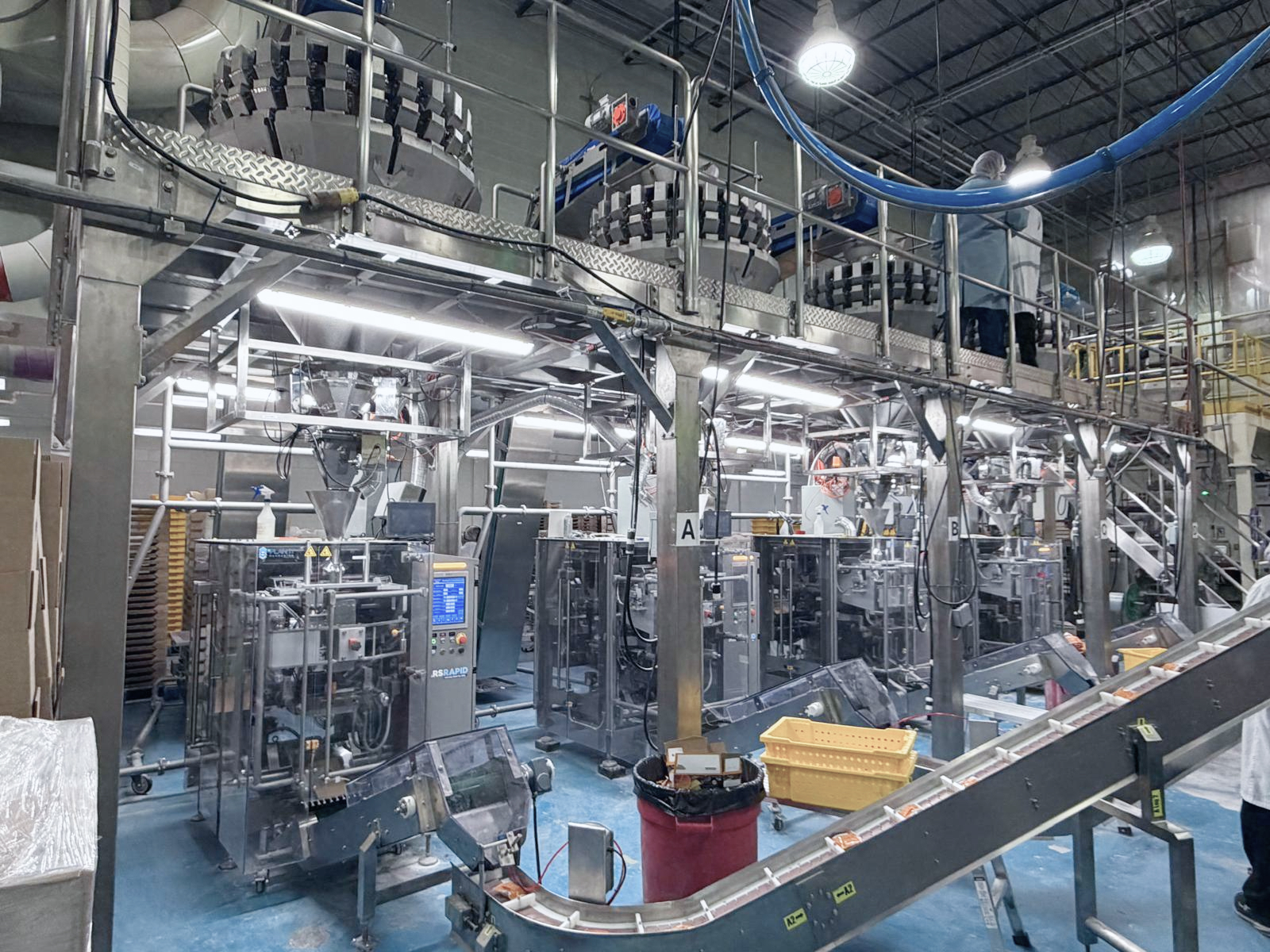
To support this initiative, PLAN IT Packaging supplied and integrated:
The result was a packaging solution designed to improve throughput, flexibility, sanitation, and uptime while helping Ganong continue scaling production efficiently.
One of the key goals of the project was to avoid relying on a single high-output packaging system.
Instead, PLAN IT Packaging recommended four completely independent bagging lines. This approach provided Ganong with:
As highlighted in the article, this configuration allowed Ganong to exceed its original throughput expectations while maintaining continuous production capabilities if one line required servicing or maintenance.
“If one line does go down for any reason, at least you still have other lines up and running.”
— Sal Choudhary, Sales Manager, PLAN IT Packaging
The installed Mars Rapid VFFS baggers were designed to support high-speed pouch production while maintaining sanitation and accessibility for operators.
Key system features included:
The ELITEWEIGH 24H multihead weighers also provided Ganong with increased weighing accuracy and versatility for handling a variety of candy and snack products.
According to the article, the new system helped Ganong achieve approximately 2.5 times the output of its previous packaging process.
One of the most important themes discussed throughout the feature was the role automation plays in supporting employees, not replacing them.
Ganong emphasized that automation investments are helping the company grow production while creating opportunities to upskill staff and improve engagement by reducing repetitive manual tasks.
This philosophy strongly aligns with PLAN IT Packaging’s approach to automation: implementing systems that help manufacturers improve efficiency, consistency, food safety, and operational reliability while empowering their teams for long-term success.
This project represents more than the installation of packaging equipment. It reflects the value of collaborative partnerships, thoughtful system design, and scalable automation strategies tailored to each manufacturer’s goals.
We are grateful to the Ganong Bros. team for the opportunity to support this exciting phase of growth and proud to see the project featured in Canadian Packaging magazine.
.jpg)
The full story dives deeper into Ganong’s incredible history, their approach to modernization, and the collaborative packaging automation project completed with PLAN IT Packaging.
Read the Full Canadian Packaging Article Here
PLAN IT Packaging delivers turnkey automation solutions for manufacturers across food, confectionery, snack, pet food, and consumer packaged goods industries.
From weighing and bagging to case packing, robotics, and palletizing, our systems are designed to help manufacturers scale with confidence.
Let's PLAN IT Together! Give us a call or tell us more about your packaging needs here.

%203.avif)


.svg)
.svg)