Ask anyone who grew up with a game console plugged into the TV, and there's a decent chance the underlying technology traces back to a defense-electronics engineer named Ralph Baer, who did some of that work out of a converted mill building in Nashua. It's a fitting home for packaging automation too: the mills themselves came first, when a textile company incorporated in 1823 ran four cotton mills employing around 1,000 workers, joined a year later by a rival mill operator, with six separate railroad lines built to move their goods. That industry held on until roughly World War I, then declined as cotton milling shifted south during the Depression, and the last mill near Nashua closed in 1949. What came next matters more: rather than leaving the buildings empty, a defense-electronics firm moved in and helped restart the local economy, proving Nashua's mill infrastructure could be retooled for entirely different manufacturing.
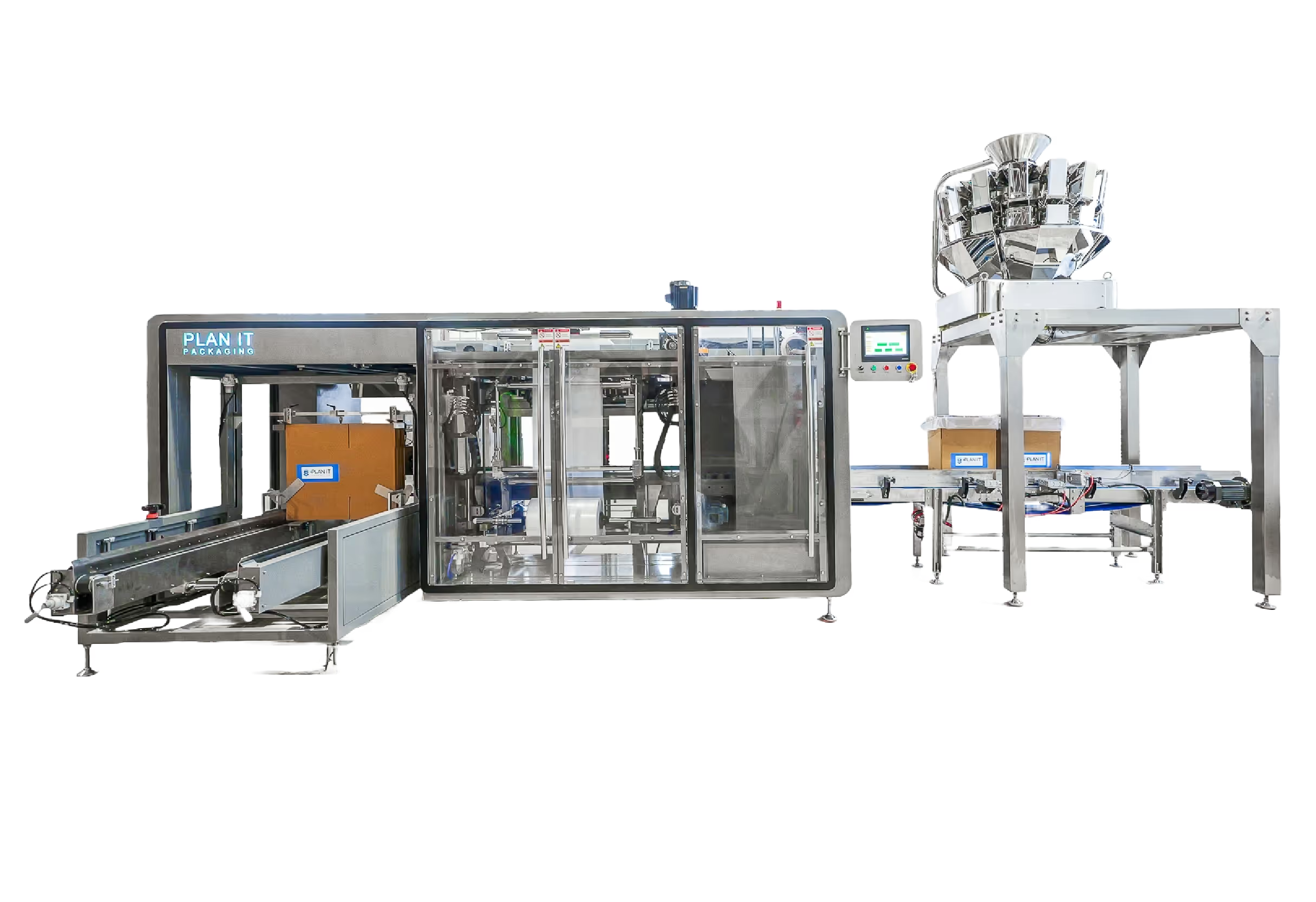
Today that retooling instinct is exactly what regional manufacturers need. This building has outlasted looms and defense contracts already; fitting a modern packaging line into it is the easy part for us. We supply Mars Series VFFS baggers, case packers, and PackMaster cobot palletizers for plants that need to add a line without building a new facility from scratch, dropping equipment into a decades-old building just as easily as a new one. We've helped a co-packer scale up production this way, adding a line without a plant move, a case study that previews what a New England manufacturer could expect. Nashua has no office of ours. What it has instead is regional reach across New Hampshire and New England: machines in stock, integration handled directly, and support that doesn't disappear after installation. Working out of a building with more history than floor space? You'll find that's less of an obstacle than it looks.


.avif)




%203.avif)


.svg)
.svg)
